Arts and culture aren’t separate from tourism. Tourism isn’t separate from arts and culture. They are integrated, and in Massachusetts communities like Beverly, that integration is driving real economic growth – more visitors, more spending, more jobs, and a stronger local identity.
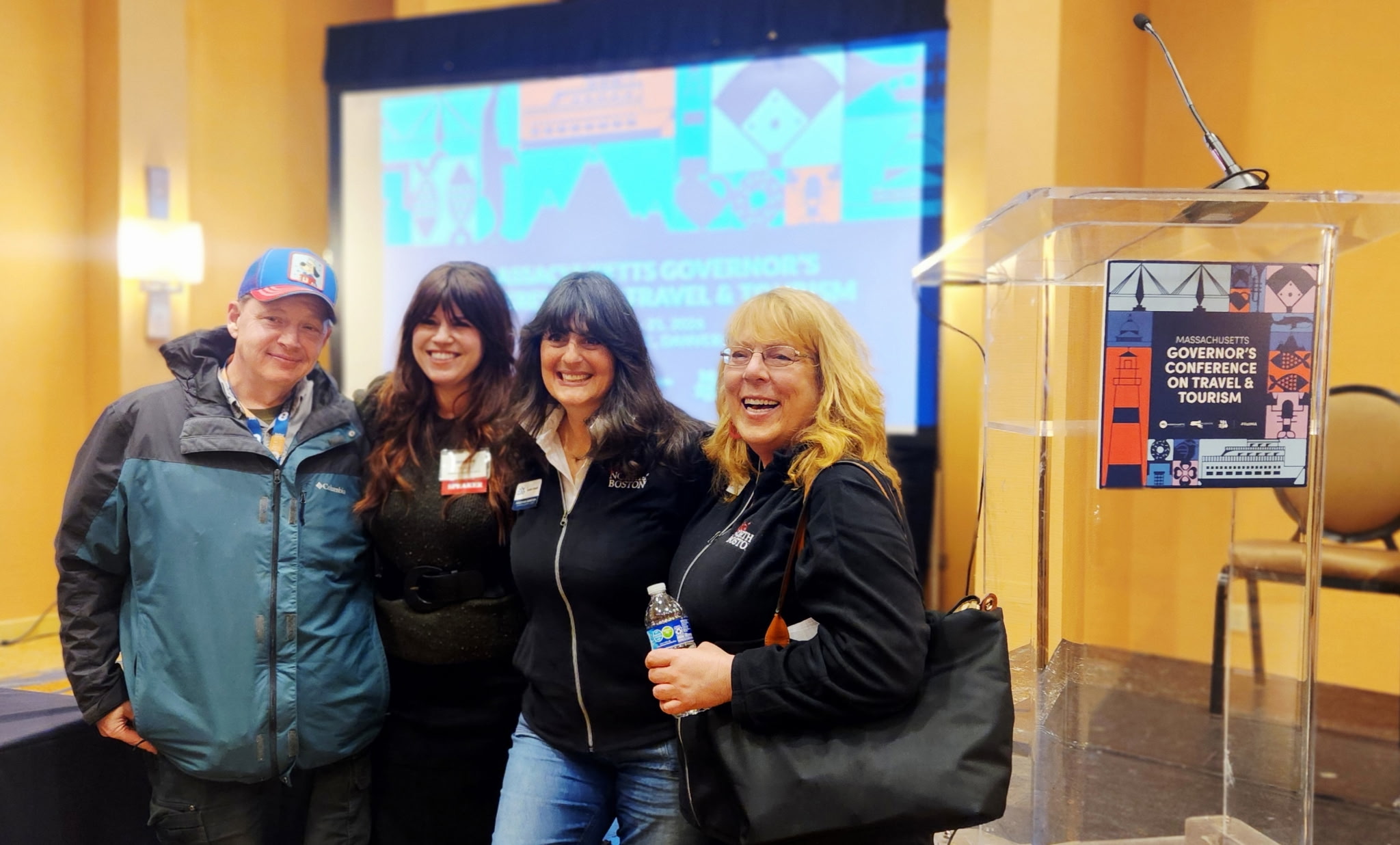
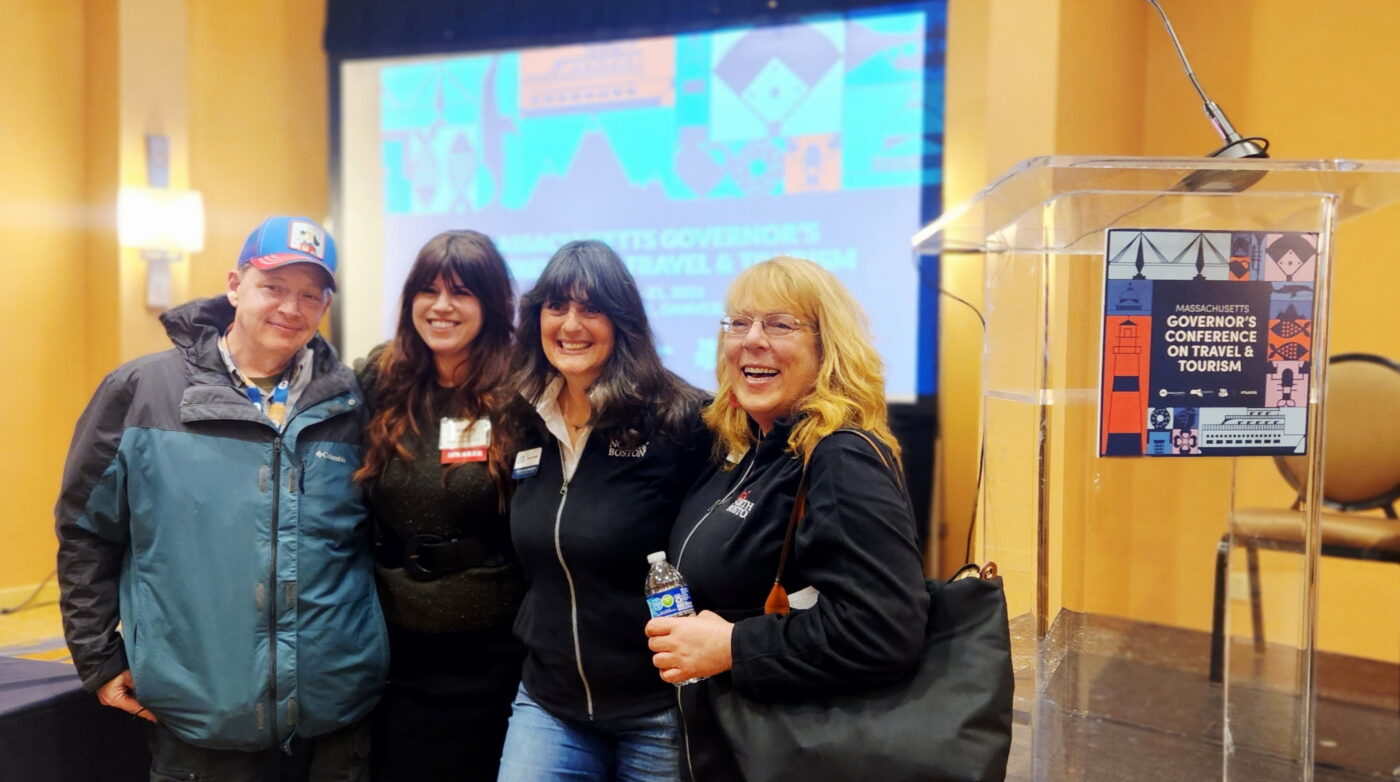
I’ve been saying this for years. A few weeks ago, I got to make that case on stage at the 2026 Massachusetts Governor’s Conference on Travel and Tourism alongside some incredible community builders: Nancy Gardella from the North of Boston CVB moderated our panel, “From Silos to Shared Space,” with Leslie Gould from the Greater Beverly Chamber of Commerce and Daniella Payant from Beverly Main Streets.
But knowing it and doing it are two very different things. The rest of this conference made the stakes crystal clear.
What Is the State of Cultural Tourism in Massachusetts Right Now?
Before our panel even took the stage, the conference had already laid out the landscape. Fred Dixon, President and CEO of Brand USA, delivered a keynote on the international travel picture and didn’t sugarcoat it: the US saw 68 million international visitors in 2025, down six percent. Canada is down 21 percent. Brand USA’s federal matching funds were slashed 80 percent last summer. Those are real headwinds.
But here’s what stuck with me. Even with all of that, the USA remains the most aspirational long-haul destination in the world. International visitors are spending $250 billion a year – nearly $700 million a day – in American communities. Brand USA’s new strategic focus is targeting visitors who “stay longer, spend more, and venture beyond the gateway cities.”
Read that last part again. Beyond the gateway cities. That’s us. That’s Beverly. That’s the North Shore. That’s every community in Massachusetts offering authentic experiences.
The access is there to support it. Dixon shared that Boston Logan’s international nonstop capacity is up 10 percent in 2026, with new routes from Madrid, Barcelona, Milan, Dublin, and Montreal all launching this spring. Spain has the biggest gain in seats year-over-year to Boston. The world is getting a more direct path to our doorstep.
Then the closing plenary brought the picture for summer 2026 into focus. The FIFA World Cup brings seven matches to Boston starting June 13, with an estimated $800 million in economic impact for Massachusetts and 50,000 Scottish fans alone expected to flood the region. Sail Boston returns July 10-16 – potentially the largest maritime event in New England history – with 70 vessels from 27 countries. MA250 has over 750 events statewide celebrating our semiquincentennial. These events overlap. The World Cup’s last match is July 9. The ships sail through the Cape Cod Canal July 10. The Parade of Sail is July 11.
This is the biggest convergence of tourism events Massachusetts has ever seen. The communities that are ready for it will benefit enormously. The ones still operating in silos won’t.

Nancy Gardella from the North of Boston CVB moderated our panel, “From Silos to Shared Space,” with Leslie Gould from the Greater Beverly Chamber of Commerce, Daniella Payant from Beverly Main Streets, and David Slattery from Mass Cultural Council
Why Do Arts and Culture Organizations Compete Instead of Collaborating?
Go back eight or ten years, and there was a massive divide between how we talked about tourism and how we talked about arts and culture. Different conferences. Different funding streams. Different language. Different tables. Some of that has improved. A lot of it hasn’t.
Right now, funding is so scarce that I see silos building in every community. It’s Hunger Games out there, and it isn’t cool. Organizations that should be collaborating are competing for the same shrinking pool. Every mayor I know is panicking about budgets. Housing insecurity, food insecurity: those get prioritized. I get it. But here’s what I push back on: if we’re not making our communities places people want to live, they won’t be places people want to visit either. These things aren’t in competition. They feed each other.
The numbers back this up. In 2024, more than 52.6 million visitors spent $24.2 billion in Massachusetts, generating $2.3 billion in state and local tax revenue and supporting over 155,000 jobs. Nationally, the arts and culture sector is a $1.1 trillion industry supporting 5.2 million jobs – 4.3 percent of GDP, larger than transportation, construction, or agriculture. Massachusetts alone has 58 state-designated cultural districts that reported 1.7 million visitors and 240 new businesses opening within their boundaries last year.
This is infrastructure. When we wall off arts and culture from tourism, or tourism from economic development, we’re leaving money, jobs, and community vibrancy on the table.
How Beverly, MA, Became a Cultural Tourism Case Study
Beverly is living proof of what happens when a community stops operating in silos and starts building together.
Look at the momentum. Realtor.com named Beverly’s zip code 01915 the hottest in the entire United States last year. Homes are getting 4.6 times more views than average, median price $746,000, selling in 16 days. That didn’t happen in a vacuum. Historic Beverly’s collection was featured in a Ken Burns documentary. Montserrat College of the Arts invested in the downtown. Beverly Main Streets has been revitalizing businesses within its designated cultural district. And the Greater Beverly Chamber of Commerce decided to make tourism a front-and-center feature of their work – not an afterthought buried in a business directory.
That’s a strategic pivot. When all you’re doing is handing your business directory to other businesses, that isn’t going to get you new customers. Once you’ve built those B2B connections, where’s the consumer base? Where are the people showing up, buying meals, visiting? Leslie Gould saw that and made the pivot. She brought nine years of tourism experience from directing the Marblehead Chamber – running fan tours, hosting travel writers, building visitor guides – and applied that playbook to Beverly. Genius.
Layer on The Bower, a building that now houses forty creative small businesses, Beverly Main Street’s offices, the town’s executive offices, and flex space in the basement. Layer on The Cabot Theater’s renovation. Layer on North Shore Music Theatre as an anchor. Layer on a Main Street team that throws events with real intention about how they impact the businesses around them. They don’t pop up an event downtown without thinking about how it moves the needle for surrounding shops and restaurants. That’s not one person’s vision. That’s a community deciding to work together.
How Does Language Shape the Economic Argument for Arts and Culture?
One shift I’m really proud of is how we describe The Bower. Years ago, it would have been “a studio building with open studios.” Now we describe it as a building full of forty small businesses. Because that’s what they are. Every one of those people is working, selling their work, paying taxes, shopping locally, and going to coffee shops.
When you say “forty artists,” some people hear a nice-to-have. When you say “forty small businesses,” the value proposition hits differently with city officials, developers, and funders. That language shift matters. It’s not spin. It’s accuracy. And it opens doors that “arts and culture” sometimes can’t.
In another breakout session at the conference, Lisa Simmons from Mass Cultural Council and artist Erica Hagler made the same point from a different angle. Erica talked about how art in restaurants isn’t decoration. It’s placemaking. It’s the difference between the place with great food and the place with the vibe. People take their out-of-town friends to the place with the vibe. That’s economic impact. That’s return visits. It starts with treating creative work as a strategic investment, not an afterthought.
Why Authentic Storytelling Is the Most Powerful Cultural Tourism Strategy
I’m a big fan of telling authentic stories and making people fall in love with the things they’re actually going to experience when they get there. Not the Disney-fied version. The real story is more interesting, and it’s what people come to see.
Here’s an example. I found out that a shop owner’s storefront in Beverly used to house one of the oldest integrated jazz bands. The Lynch Park Half Shell is named after it. We traced a connection to the same jazz and soul scene and Dizzy Gillespie. Tell people that story. They’re going to visit for it. You don’t need to fabricate anything. Authentic stories attract good visitors.
Brand USA’s Fred Dixon is saying the same thing at the national level. Their “America the Beautiful” campaign – now running across nine international markets with over a thousand creative assets – is built on exactly this: sharing a human connection, not selling a destination. Early testing shows 72 percent of international travelers respond positively, and 67 percent report increased intent to visit. The campaign works because it’s authentic. Real stories about real places. That model works at every scale, from a national campaign down to a Beverly storefront with a jazz history nobody knew about.
Arts and culture people aren’t always the greatest marketers, and we don’t always have big platforms. But we have incredible stories. Tourism has the platforms and the audience. It makes so much more sense to integrate than to overcomplicate it.
Holding Leaders Accountable for Arts, Culture, and Tourism Investment
I’ll say the uncomfortable part. We need to hold our leaders accountable. Show up at town halls. Demand more from mayors and city councilors when it comes to arts, culture, and tourism. Any community without these things is diminished, and the businesses that depend on foot traffic and vibrancy won’t stay open. If our leaders don’t believe in these sectors, maybe they shouldn’t be leading.
The other group that needs accountability: developers and real estate owners. They’re making a lot of money off our communities being vibrant. Their property values go up because of the festivals, the creative businesses, the culture. But they don’t write festival checks. They’re not giving back to the community that makes their investments so valuable. That needs to change.
And for everyone else: if you enjoy these things, get more vocal. Post about the festival you went to. Share the experience. If federal and state funding isn’t there, maybe we need to tap into community more. Social capital and actual capital. Share it.
What Does Beverly Need Next to Maximize Its Tourism Potential?
Beverly still needs a hotel. It needs deeper funding strategies. It needs a formalized tourism committee that connects all of these dots. Leslie, Daniella, and I talked about all of that openly on stage because an honest conversation is a productive one.
But the window is open in a way it hasn’t been before. This summer, Massachusetts will host FIFA World Cup matches, drawing millions of international visitors who need things to do on off-days between games. Sail Boston will bring 70 ships from 27 countries and potentially millions more to the waterfront and beyond. MA250 celebrations are happening in communities across the state. Neil Flaherty from the FIFA Host Committee told us at the conference that there’s a FIFA app and a WhatsApp channel already reaching 5,000+ international subscribers.

They want to fill both with local experiences for visitors.
What Beverly has that every community can build is this: people who are willing to stop operating in silos and start building together. A chamber that embraces tourism. A Main Streets organization that pays performers and plans events with business impact in mind. Creative businesses that see themselves as economic contributors. Residents who love where they live so mu
ch that marketing almost does itself.
Nancy Gardella said it perfectly: when people love to live and play somewhere, it’s easy to market. That pride of place is Beverly’s secret weapon, and it’s available to every community willing to do the work.
Stop building walls. Tell your real stories. Hold your leaders accountable. And if you see someone doing good work in the community next door, don’t compete. Collaborate. The North Shore is an ecosystem, and we’re all stronger when we act like it.
Especially now.
Key Takeaways: Integrating Arts, Culture, and Tourism
What is cultural tourism and why does it matter?
Cultural tourism is travel motivated by authentic local experiences – arts, live performance, historic sites, culinary culture, and community events. In Massachusetts, it’s a measurable economic driver: 52.6 million visitors spent $24.2 billion in 2024, supporting 155,000 jobs and generating $2.3 billion in tax revenue.
Why should arts organizations and tourism boards work together?
Arts and culture organizations have the stories. Tourism boards have the platforms, the audience, and the distribution. Neither sector reaches its full economic potential operating alone. Integration means more visitors, longer stays, higher spend, and stronger community identity.
How can smaller communities attract cultural tourists?
Start with authentic local stories – not manufactured experiences. Build partnerships between chambers of commerce, Main Streets organizations, and creative businesses. Reframe arts as economic infrastructure, not amenity. Beverly’s model shows how deliberate collaboration across these groups drives measurable results.
What is the economic impact of arts and culture nationally?
The U.S. arts and culture sector generates $1.1 trillion annually and supports 5.2 million jobs – 4.3 percent of GDP. That’s larger than transportation, construction, or agriculture.
How is Massachusetts positioned for summer 2026 tourism?
Massachusetts is hosting seven FIFA World Cup matches (estimated $800 million economic impact), Sail Boston (70 vessels from 27 countries), and over 750 MA250 anniversary events statewide. Communities with integrated arts, culture, and tourism strategies are positioned to capture significant visitor spending from all three.
John Andrews is the founder of Creative Collective, building community through business across Essex County, Massachusetts. He spoke at the 2026 Massachusetts Governor’s Conference on Travel and Tourism on the panel “From Silos to Shared Space: Unlocking the Power of Tourism and the Creative Sector in Beverly.”
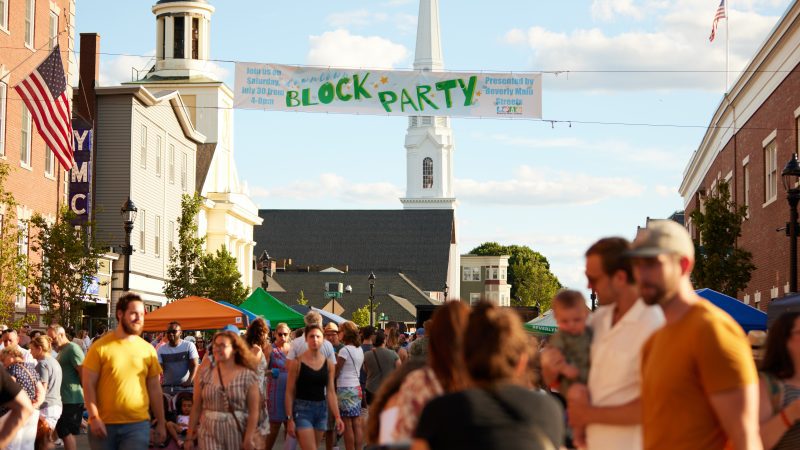
Beverly Main Streets
View their Member Listing
Beverly Main Streets: Empowering Community and Economic Growth Beverly Main Streets is a dynamic and community-focused organization dedicated to revitalizing downtown Beverly, Massachusetts. With a small but passionate staff of three, bolstered by the incredible energy and dedication of over 100 volunteers, we are at the heart of Beverly’s transformation into a vibrant, economically robust, and culturally rich destination. Our
SEE LISTING