Experience Silent Film as It Was Meant to Be: Nosferatu with Live Orchestra at PEM
Arpeggione Ensemble brings 1922 horror classic to life with historically accurate score and period instruments on October 25
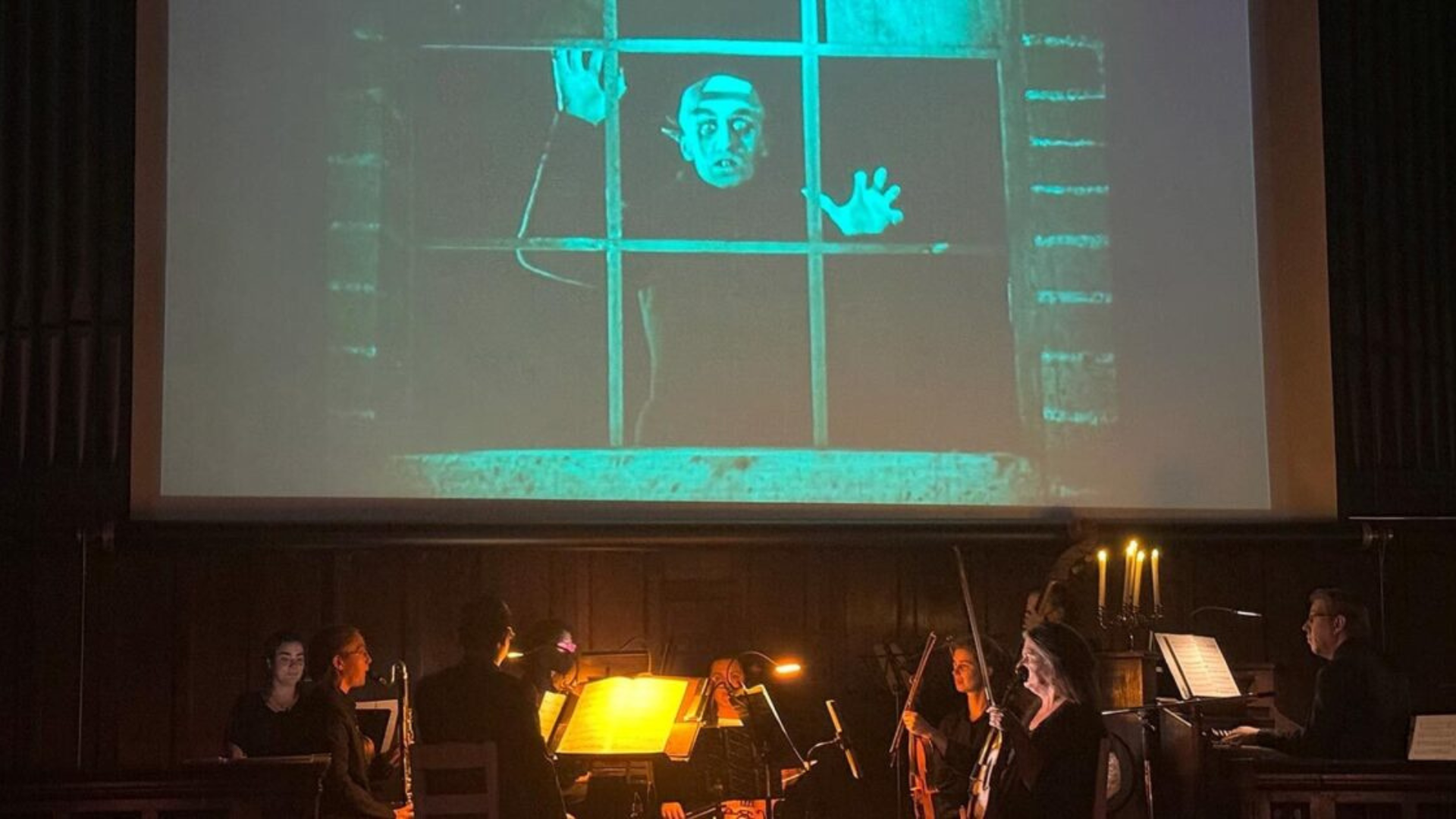
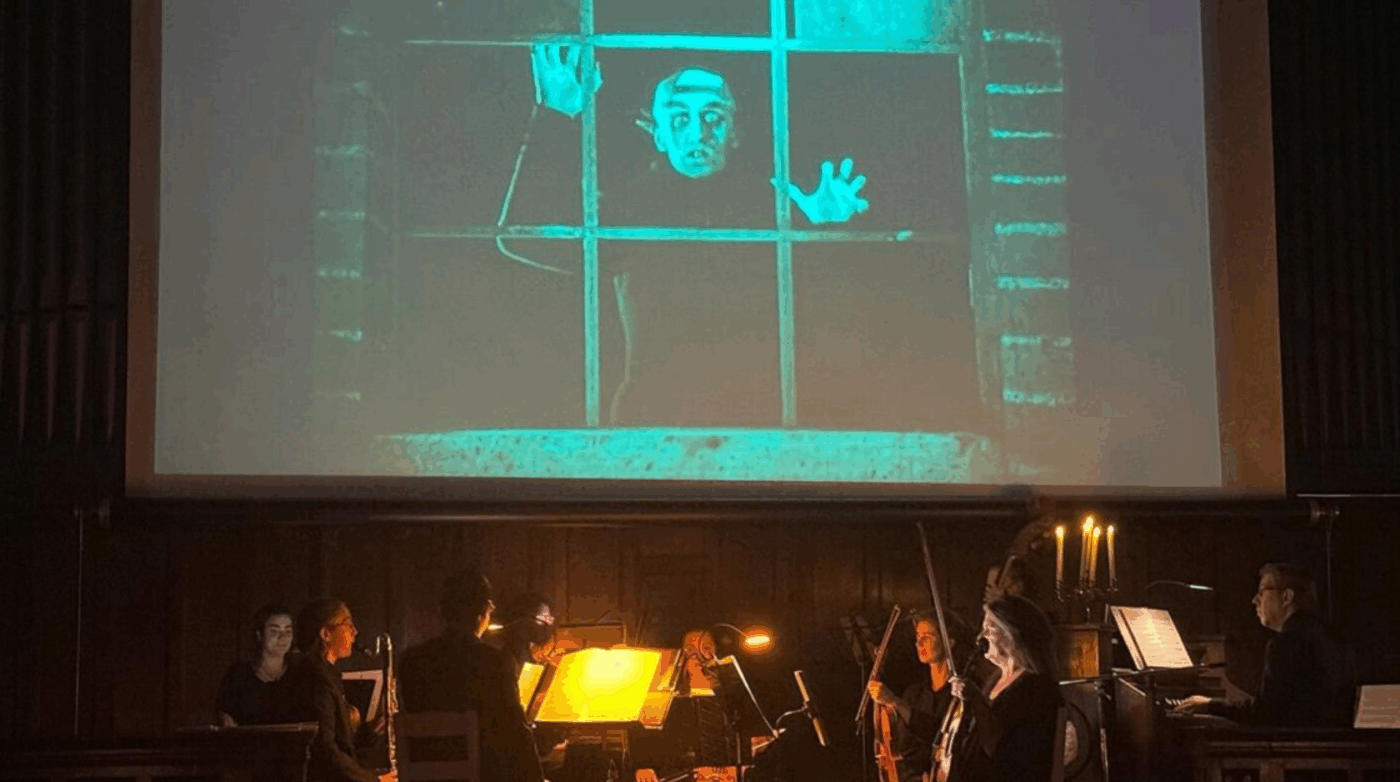
Salem, Massachusetts – This October, the Peabody Essex Museum offers something you can’t stream at home: the chance to experience the 1922 silent film Nosferatu: A Symphony of Horror exactly as audiences would have in the golden age of cinema—with a live orchestra performing in the theater.
The Arpeggione Ensemble will present two screenings on Saturday, October 25 at 1:00 pm and 6:00 pm in Morse Auditorium, performing a historically informed reconstruction of the original score on authentic instruments from the early 20th century. This isn’t background music—it’s an integral part of how the film was designed to be experienced.
Recreating the Magic of 1920s Cinema
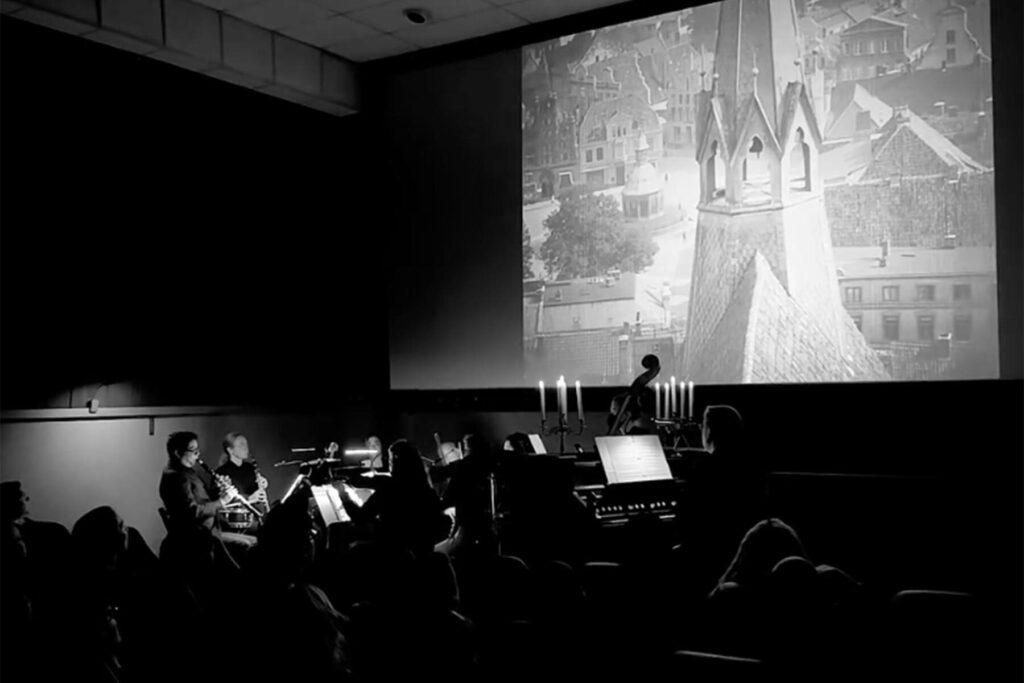
As Thomas Carroll, co-director of Arpeggione Ensemble, explains in his article for PEM: “At the height of their popularity, silent movies weren’t silent: Audiences experienced a film with a live orchestra playing along in the theater, or at least an organist or pianist.” Every moment of terror had an accompanying musical mood, creating an immersive experience that modern moviegoers rarely encounter.
Carroll emphasizes what makes live performance so distinctive: “There’s also something so vibrant and organic about feeling the vibrations of live music as you’re watching a movie — an experience that moviegoers regularly had in theaters during the silent film era.”
The film itself carries this musical intention in its very title. As Carroll notes: “Even the subtitle of Nosferatu is ‘A Symphony of Horrors.’ It’s very clear that Murnau thought of music, whatever that meant, as an integral part of this film.”
A Painstaking Musical Reconstruction
The score Arpeggione performs represents years of scholarly detective work. The original score for Nosferatu‘s Berlin premiere was composed by Hans Erdmann, but that score is lost to history. What remains is fragmentary—keyboard reductions of themes with notations about mood and occasional instrument suggestions.
Working from these clues and later reconstructions, Arpeggione has reimagined the score for performance by a 1920s theater orchestra, complete with period-appropriate instrumentation including harmonium, flute, clarinet, and strings. The ensemble even performs on historical instruments from the early 20th century, creating an authentic sonic experience that matches the visual one on screen.
The Film That Defined Horror

Nosferatu stands as the earliest film adaptation of Bram Stoker’s Dracula, though copyright issues forced the production company to change character names and certain plot elements. Jonathan Harker became Hutter, and Count Dracula became the unforgettable Count Orlok.
But the film’s influence extends far beyond its connection to Stoker’s novel. Carroll writes: “From the eerily corpse-like appearance of Max Schreck as Orlok to the oft-parodied staircase shot at the film’s climax, Nosferatu set the standard for the modern horror movies as well as the genre of vampire films.”
Interestingly, several defining elements of vampire mythology come not from Stoker’s pages but from this film adaptation. While Dracula walks openly in sunlight in the novel, Count Orlok must avoid it at all costs—establishing a vampire “rule” that persists in popular culture today.
An Experience That Shocks the System
For Carroll, who has been living with this score for more than two years, the live performance dimension remains thrilling. “I think audiences can expect to see and hear the film in a completely new light,” he promises, noting that even after extensive preparation, conducting the score with the film for the first time revealed new possibilities for highlighting the action on screen.
He continues: “I feel like as a society we’ve been fed packaged and perfected music all our lives, so listening to live music where anything can happen really feels like a shock to the system.”
Arpeggione: Building Community Through Historical Performance
The ensemble behind this event brings more than technical expertise—they bring a mission centered on accessibility and community building. Arpeggione is a BIPOC- and woman-led organization at the forefront of historically-informed music, drawing inspiration from groundbreaking salons led by women in the past.
Their guiding principle recognizes that everything listeners think and feel in a concert is just as much a part of the experience as the notes being played—regardless of musical background or knowledge. As their mission states, they’re not recreating the past, but creating a totally new experience together with their audiences.
The ensemble performs works by underrepresented composers and makes their programs accessible to audiences who would not normally experience live music, expanding perspectives on both historical performance and who gets to participate in classical music experiences.
A Rising Phenomenon
Carroll observes that we’re witnessing a resurgence in Nosferatu screenings with live music, with more theaters willing to incorporate live performance—whether organ improvisation, modern electronic scores, or historical reconstructions like Arpeggione’s. The 1922 film has always maintained a cult following, but this renewed interest suggests audiences are hungry for experiences that can’t be replicated at home.
Event Details
What: Nosferatu: A Symphony of Horror (1922) with live orchestra
When: Saturday, October 25, 2025
Showtimes: 1:00 pm and 6:00 pm
Where: Morse Auditorium, Peabody Essex Museum
Tickets: $30 PEM members, $40 non-members
Duration: Approximately 2 hours 15 minutes
Purchase tickets through the Peabody Essex Museum website.
Why This Experience Matters
In an era of streaming services and home theaters, this event offers something genuinely irreplaceable: the communal experience of watching a film the way its creators intended, with live musicians responding to the action in real time, using instruments that would have been familiar to audiences in 1922.
For horror fans, it’s a chance to see the film that established the visual and narrative vocabulary of vampire cinema. For music enthusiasts, it’s an opportunity to hear historically informed performance that brings early 20th-century theatrical practice to life. For vintage aficionados and anyone curious about film history, it’s a window into how audiences experienced movies before synchronized sound.
As Carroll invites: fans of horror, music enthusiasts, vintage aficionados—enter if you dare to see and hear Nosferatu as it would have sounded when it was first screened.
This October 25, the Peabody Essex Museum transforms into a 1920s movie palace, complete with live orchestra, offering an experience that reminds us why some art forms deserve to be encountered together, in person, as a community.
For more information about Arpeggione Ensemble, email arpeggione.ensemble@gmail.com or call (978) 500-7766.