By John Andrews | Content Director, Creative Collective | February 2026
On Wednesday night, a group of us stood inside something historic.
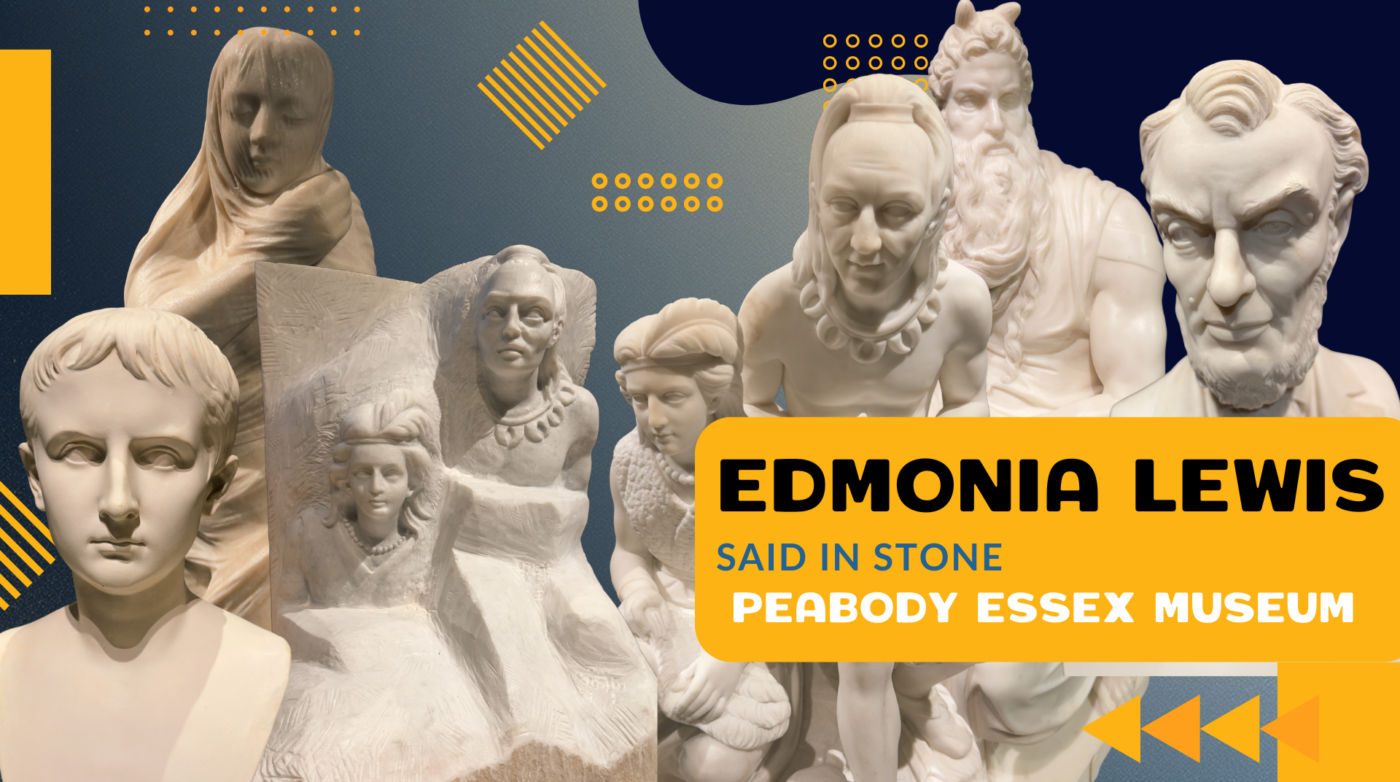
The Peabody Essex Museum opened its doors for a press and influencer preview of Edmonia Lewis: Said in Stone — the first major retrospective devoted to a nineteenth-century sculptor who was told, in every way a society can tell someone, that she didn’t belong. That she couldn’t do the thing she was put here to do.
She went to Rome anyway.
And standing in those galleries with members of our community — makers, business owners, community builders, artists, organizers — watching them move through the work, watching the conversations unfold between people who might not have been in that room otherwise, I kept thinking about what it means to gather people in the presence of someone who refused to disappear.
Who Was Edmonia Lewis, the Sculptor Who Refused to Be Categorized?
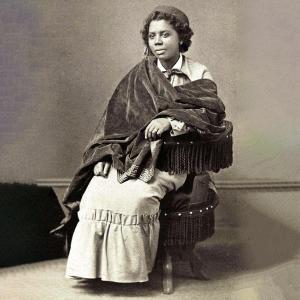
Henry Rocher, National Portrait Gallery, Smithsonian Institution, Public Domain
Edmonia Lewis was born in 1844. Black and Indigenous — her mother was Mississauga Ojibwe, her father was Black. She was orphaned young, raised by her maternal aunts in the Great Lakes region, where the women in her family were known for their artistry. Her mother was famous for inventing new embroidery patterns. Lewis would later say, “Perhaps the same thing is coming out of me.”
She faced persecution at Oberlin College and was prevented from enrolling in her final term. She arrived in Boston in 1863, met Frederick Douglass, and built a community around herself — not just the white abolitionist patrons whose names fill the history books, but a network of Black entrepreneurs, activists, and organizers who gave her the platform for her debut as an artist.
And then, at twenty-two, she crossed the Atlantic.
“The land of liberty had no room for a colored sculptor,” she said in an interview. So she moved to Rome to find the freedom to make her work and have it appreciated on its own terms.
Think about that for a minute. Twenty-two years old. Black and Indigenous. A woman. Working in neoclassical sculpture — white marble, the most elite artistic medium of the era — at the very center of the international art world. Producing some of her earliest sculptures while people who looked like her were still enslaved.
Co-curator Shawnya Harris put it perfectly during Wednesday’s opening remarks: Lewis understood both the artistic and commercial dimensions of her work. She was deeply attuned to her audience. She had remarkable savvy in navigating a profession that often denied women, and especially women of color, entry.
She wasn’t just a sculptor. She was an entrepreneur. She used her own image and words to market herself. She kept a table in her studio where visitors left calling cards — Americans, Italians, Germans, the English, members of nobility. She got herself listed in the guidebooks that recommended which studios travelers should visit in Rome.
She did all of this while the world around her insisted on the impossibility of who she was.

What Does the Edmonia Lewis Exhibition Reveal About Salem’s Connection to Her Story?
Here’s a detail that stopped me in my tracks during Jeffrey Richmond-Moll’s curator tour: when Edmonia Lewis first arrived in Rome in the winter of 1865, it was two women from Salem, Massachusetts, who helped her find an apartment and a studio. Abigail and Elizabeth Williams.
Lynda Roscoe Hartigan laughed from across the room. “Of course, it was Salem.”
But it kept going. The community of Black entrepreneurs and activists who supported Lewis in Boston included Christiana Bannister, whose brother married into the Remond family — of Salem. The Remond family ran a hair salon at 188 Essex Street. The Peabody Essex Museum sits at 161 Essex Street.
The story of Edmonia Lewis is, in ways that feel almost impossible, a story that runs right through the ground we’re standing on.
And one of the most striking objects in the exhibition is proof: a plaster bust of Colonel Robert Gould Shaw that Lewis created in 1864. The bust was in the Massachusetts National Guard collection, essentially hidden in plain sight. The curators found it through a Facebook post. It hadn’t been publicly shown since Lewis debuted it in Boston over 150 years ago. Another bust — of John Brown — hasn’t been shown since 1876.
These weren’t lost because no one cared. They were lost because no one with institutional power was looking.
Why Do We Say Edmonia Lewis Was “Forgotten” — and Is That Even Accurate?
This is the part that stays with me.
During the opening, PEM’s Rose-Marie and Eijk van Otterloo Executive Director and CEO Lynda Roscoe Hartigan framed the exhibition as a chance to ask urgent questions: How is someone’s visibility determined? Who grants authority? And how do we change histories that have been overlooked, underestimated, or — let’s face it — selectively remembered?
Co-curator Shawnya Harris took it further. “When we talk about Edmonia Lewis’s legacy,” she said, “we often hear that she was forgotten. But the more closely you look, the more you realize that her story is not one of disappearance — it’s one of selective memory.”
Lewis’s work was remembered. It was preserved — particularly within Black communities and institutions. When mainstream narratives failed to make room for her, it was scholars, collectors, civic organizations, and educators who continued to search for her work and insist on its importance.
Delta Sigma Theta Sorority gifted Lewis’s Hagar to the Smithsonian American Art Museum, believing the work deserved a place in the nation’s collection. Her grave in London went unmarked until 2017, when a grassroots campaign finally gave her a headstone bearing her name, dates, and profession: Edmonia Lewis, sculptor.
This wasn’t institutional recovery. This was the community carrying the legacy forward.
And that distinction matters.
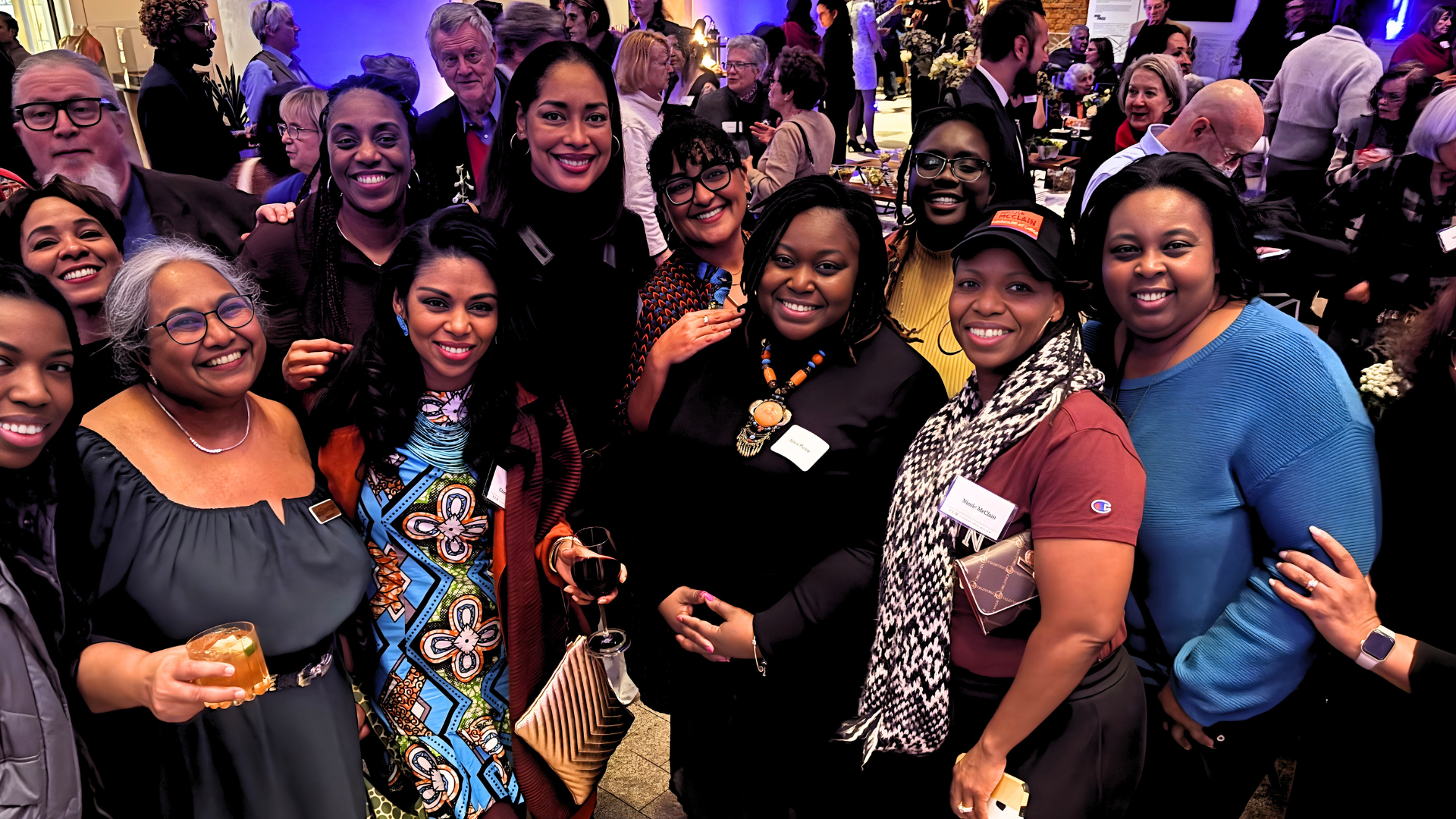
Members of Creative Collective and community members with actress Gina Torres at the press preview reception for Edmonia Lewis: Said in Stone at the Peabody Essex Museum, February 11, 2026.
What Will You See at Said in Stone at the Peabody Essex Museum?
Thirty sculptures. Eighty-five additional objects — paintings, photographs, archival materials, Indigenous cultural belongings. The largest number of Lewis’s works ever brought together in one place. Co-organized by PEM and the Georgia Museum of Art, the exhibition will travel to Georgia and then to the North Carolina Museum of Art through 2027.
The scholarship is extraordinary. The conservation work is meticulous. The design of the galleries — from the red brick evoking Beacon Hill to the deep blue signaling the Great Lakes of Lewis’s Anishinaabe homeland to the plastered walls conjuring her Roman studio — moves you physically through the story of her life and career.
But what I keep coming back to is the room itself.
Wednesday night, the people gathered in those galleries weren’t just looking at sculpture. They were having conversations — about craft, about identity, about whose stories get told and who does the telling. About what it means to make something in a world that says you can’t.
One of the CC members turned to me during the tour and said, “How was she forgotten?” And someone nearby, one of the scholars who’d worked on the exhibition, said essentially: she wasn’t. We just stopped looking.
That exchange doesn’t happen without the gathering. That moment of connection — between a community builder and a scholar, between a question and an answer that reframes how you see the world — doesn’t happen without everyone being in the room together.
This is something I believe deeply: the power of creative people in the same space, encountering something meaningful together, is fundamentally different from encountering it alone. Dialogue happens. Perspectives shift. You leave the room carrying something you didn’t walk in with.
Creative Noncompliance as Legacy
Jeffrey Richmond-Moll closed the curator tour with a question that I haven’t been able to shake: “Who are we called to remember?”
And I think about the artists, the makers, the small business owners, the community builders across Essex County and beyond who are doing versions of what Lewis did — working against the grain, building something in spaces that weren’t designed for them, using whatever tools they have to say something true.
Lewis took the most elite artistic medium of the nineteenth century and used it to depict enslaved people breaking their own chains. Her sculpture Forever Free — among the earliest known works by an American sculptor celebrating emancipation — doesn’t show freedom being granted. It shows people freeing themselves.
She carved images of Indigenous life with the dignity and mutuality that Longfellow’s poem never bothered to offer. In her Marriage of Hiawatha, the two figures walk in lockstep, hands clasped, equals — and if you look closely, Minnehaha is the one stepping ahead. Lewis knew the power of the women who raised her, and she put that power in the marble.
She depicted women of faith — Hagar cast into the wilderness, experiencing divine deliverance. “I have a strong sympathy for all women who struggled and suffered,” Lewis said. “For this reason, the Virgin Mary is very dear to me.”
Every one of these choices was an act of creative noncompliance. Every sculpture said: I’m here, I see what you see, and I’m going to tell it differently than you’ve been told.
That’s what creators do. That’s what the people in our community do every day, at every scale.
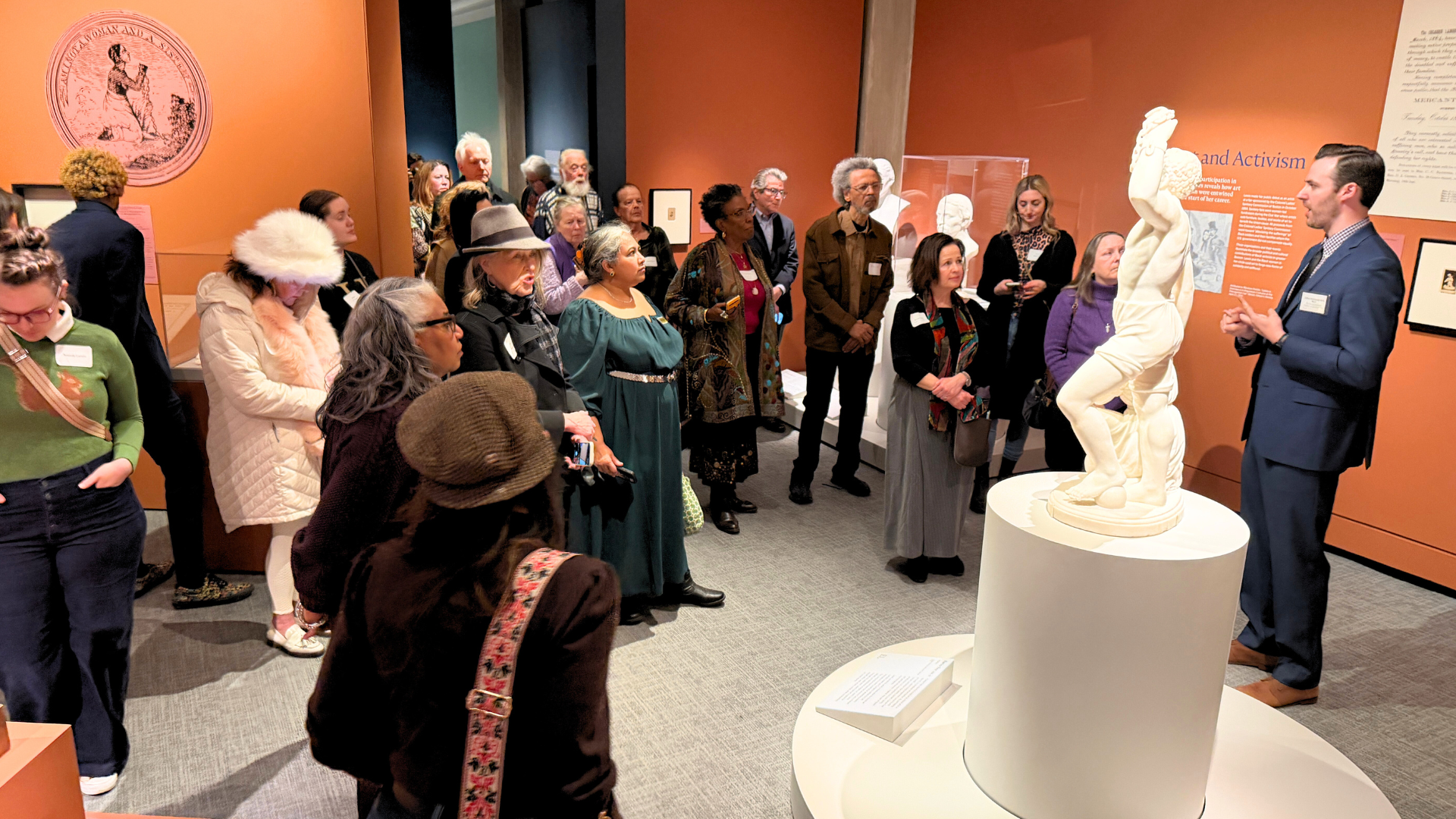
Curator Jeffrey Richmond-Moll leads a tour of Edmonia Lewis: Said in Stone at the Peabody Essex Museum, pausing at Lewis’s sculpture Forever Free (1867). Press and influencer preview, February 11, 2026.
Go See the Edmonia Lewis Retrospective
Lewis said it herself in 1878:
“Sometimes the times were dark and the outlook was lonesome, but where there is a will, there is a way. That is what I tell my people whenever I meet them, that they must not be discouraged, but work ahead until the world is bound to respect them for what they have accomplished.”
I’m grateful to the Peabody Essex Museum for the invitation to bring our community into this exhibition before it opened to the public. I’m grateful to Jeffrey Richmond-Moll, Shawnya Harris, Lynda Roscoe Hartigan, and the entire team whose years of scholarship, conservation, and care made this possible. I’m grateful to our members who showed up on a Wednesday night and let the work move them.
And I’m grateful to Edmonia Lewis, who went to Rome anyway.
Edmonia Lewis: Said in Stone — Exhibition Details
On view: February 14 – June 7, 2026 Location: Peabody Essex Museum | 161 Essex Street, Salem, MA Touring: Georgia Museum of Art (August 8, 2026 – January 3, 2027) | North Carolina Museum of Art (April 3 – July 11, 2027)
Opening Day Program: Artist Panel Saturday, February 14 | 1–2 pm | PEM’s Morse Auditorium “Whose memory do you carry?” — Join exhibition curators, contributors, and contemporary artists for a reflective conversation on Edmonia Lewis.
Exhibition hashtag: #EdmoniaLewisatPEM
Go see this. Bring someone. Have the conversation.
Because the room matters. It always has.
This story comes from the Creative Collective community — Essex County businesses who believe when we thrive together, our whole region becomes more vibrant. We’re entrepreneurs, creators, and service providers across all industries, collaborating to build the community we want to be part of. If you see your business as more than just commerce — as a way to contribute to our regional ecosystem — you belong here. Discover how to join our community →

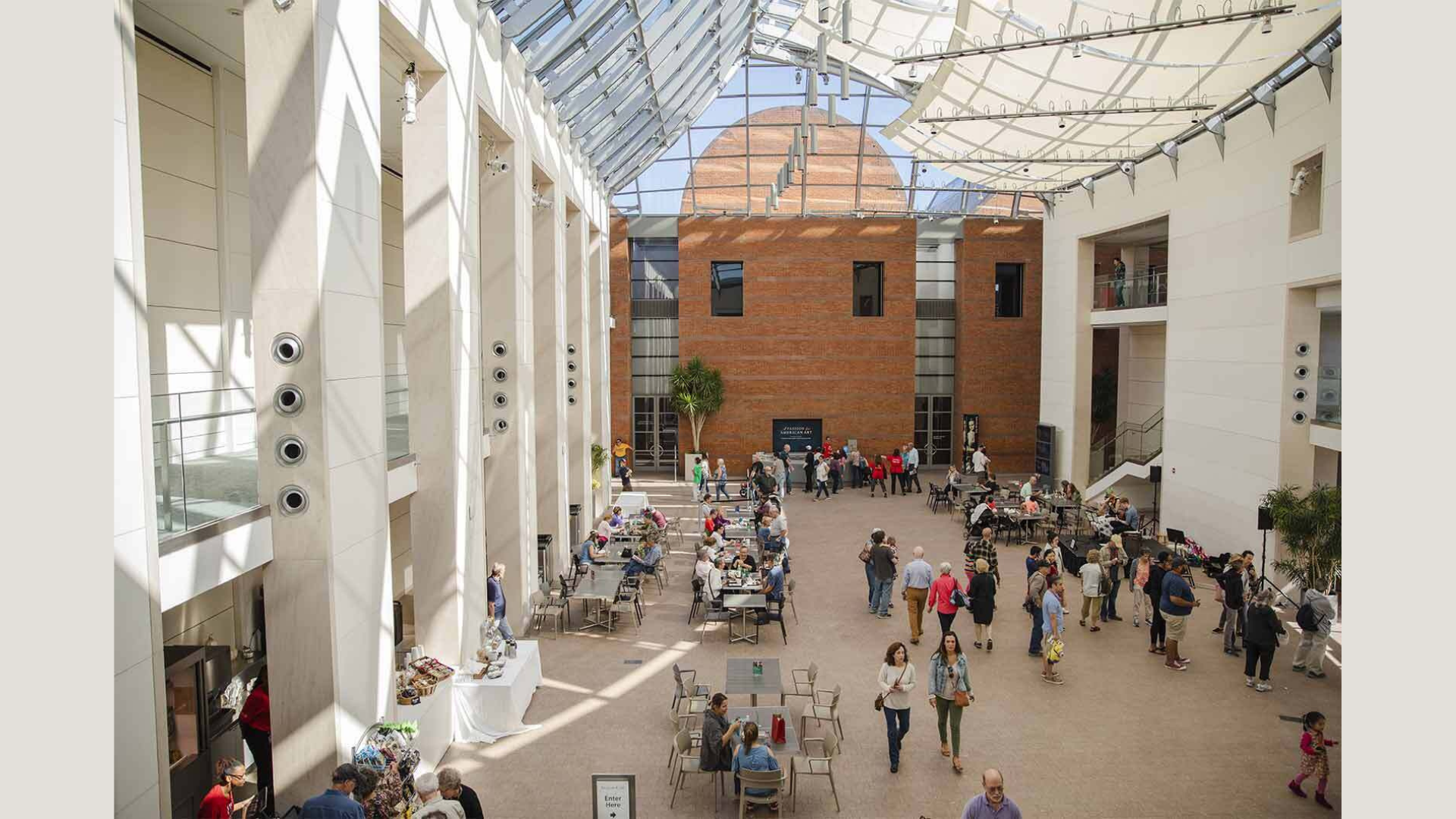
Peabody Essex Museum
View their Member Listing
The mission of the Peabody Essex Museum is to celebrate outstanding artistic and cultural creativity by collecting, stewarding and interpreting objects of art and culture in ways that increase knowledge, enrich the spirit, engage the mind and stimulate the senses. Through its exhibitions, programs, publications, media and related activities, PEM strives to create experiences that transform people’s lives by broadening
SEE LISTING