Author: John, Founder & Executive Director, Creative Collective
I need to talk about what happened while watching the Super Bowl Halftime this year. (I had some feelings about last year, too!) This one got me all up in my feels.
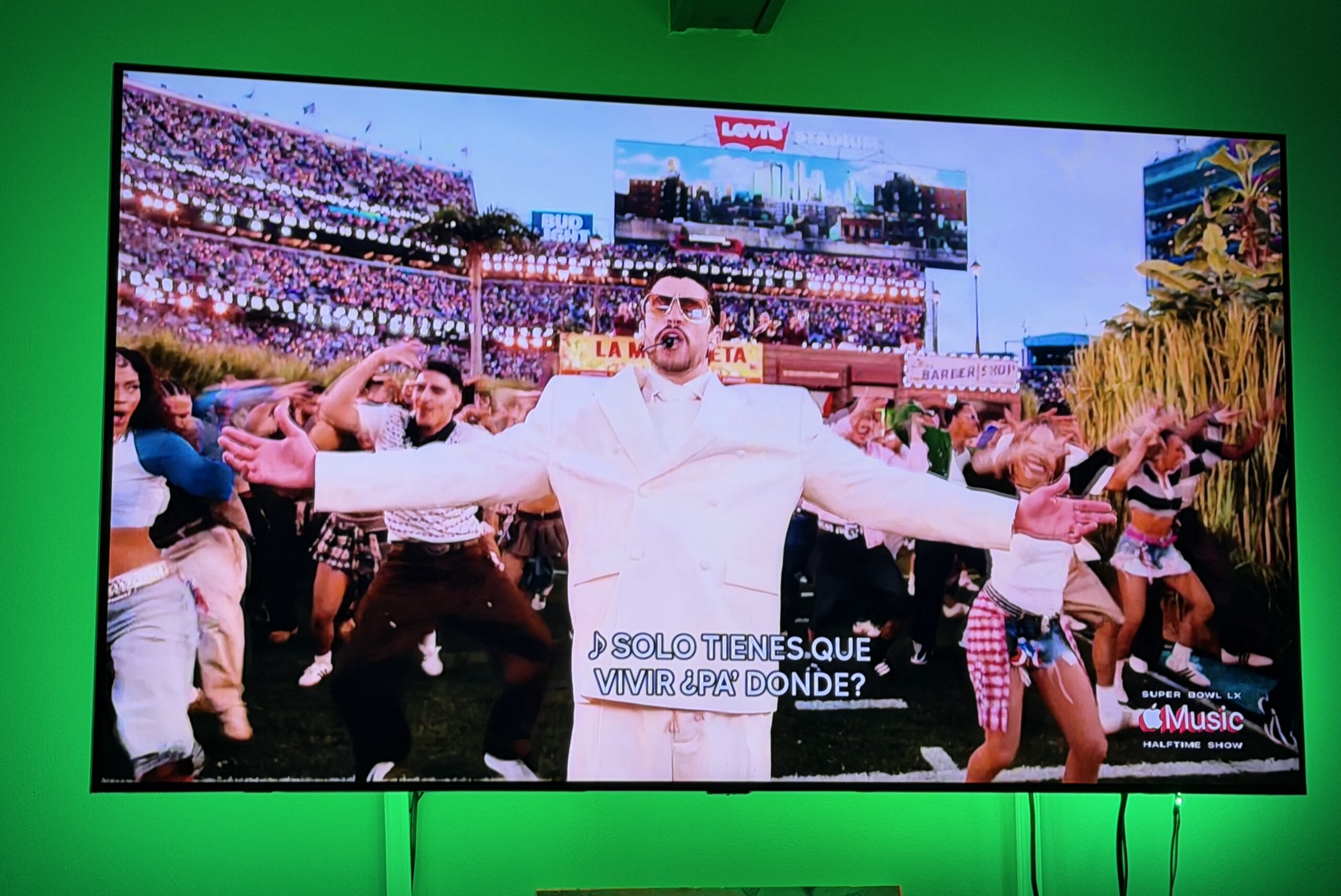
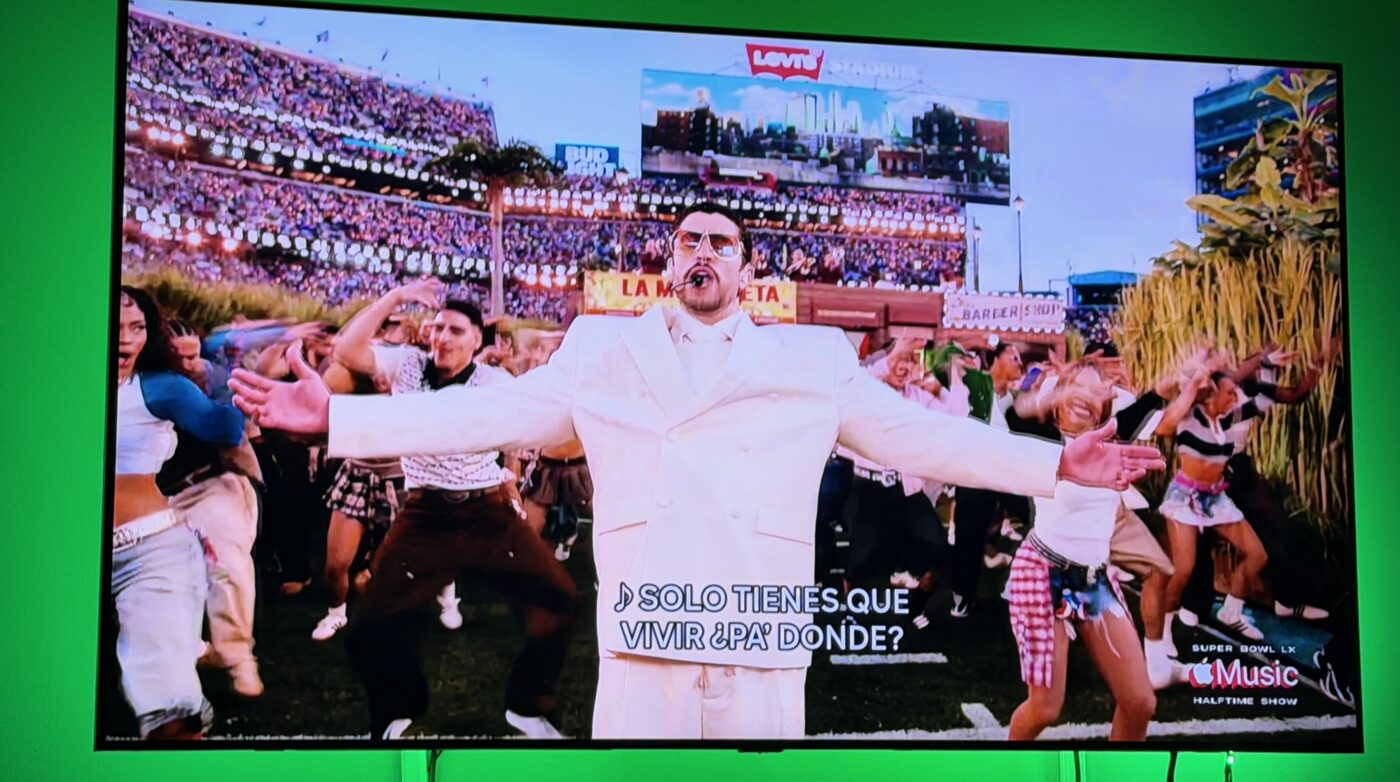
If you watched Bad Bunny’s Super Bowl halftime show, you saw more than a spectacle. The cameos and choreography amazed, but an even bigger message unfolded. You watched someone use creativity as a tool, a teacher, and a declaration — all at once.
And he made it look like a party.
The Context That Made This Performance Historic
Let me set the stage for a second—because context matters.
When Bad Bunny was named the headliner in September, the backlash was instant. Conservative politicians called it a “terrible decision.” The President said he was “anti-them.” The Secretary of Homeland Security suggested ICE agents would be at the stadium. A petition with over 120,000 signatures tried to replace him with a country artist. Turning Point USA organized an entire alternative halftime show headlined by Kid Rock.
He was told — loudly and publicly — that he didn’t belong on that stage.
And his response? He didn’t fight. He didn’t argue. He didn’t shrink.
He threw the most epic Super Bowl party ever. Entirely in Spanish. And EVERYONE was invited.
THAT is creative noncompliance. And it was a masterclass.
What Is Creative Noncompliance?
It’s not protest. It’s not rebellion. It’s not about breaking rules or picking fights.
Creative noncompliance is the decision to show up fully as who you are — your culture, your craft, your voice, your story — even when the room expects something smaller. Something safer. Something more familiar.
It’s using creativity itself as the tool. Not a weapon. A tool. For self-expression. For education. For wellbeing. For healing. For shining a light on what makes us US.
Bad Bunny didn’t give a political speech last night. He did something way more powerful. He just… was himself. Completely. Joyfully. Without apology. And in doing so, he taught 130 million people something about Puerto Rico, about community, about resilience, about joy — things no speech could have communicated as effectively.
Because that’s what creativity DOES. It goes places arguments can’t touch.
The Moments of Creative Noncompliance That Mattered Most
I want to walk through some of what happened last night. If you’re not familiar with the cultural context, you probably saw a great show. But if you understand what was underneath it, you saw something historic.
He opened in the sugar cane fields.
The very first thing 130 million people saw wasn’t a light show or a pyrotechnic countdown. It was green. Sugar cane. And workers in pavas — the traditional straw hats worn by jíbaros, Puerto Rico’s rural farmers and laborers who have been a symbol of the island’s identity for generations.
Bad Bunny walked through those fields performing “Tití Me Preguntó,” passing viejitos playing dominoes, a coconut vendor, a piragua cart, a rum shop. Before a single word about culture or identity was spoken, the stage said it all: We come from the land. We come from labor. We come from community. This is where the story starts.
Starting there wasn’t just an aesthetic choice. It was a declaration of roots. Everything that followed — the casita, the power lines, the salsa, the redefinition of America — grew from that soil. Literally.

He built a home at midfield.
Not a futuristic stage. Not a light show. A Puerto Rican home — la casita — surrounded by the details of everyday neighborhood life. Domino tables. Piragua carts. Street food vendors. Boxing matches. The stuff of LIFE on the island.
For Puerto Ricans and so many Caribbean and Latino communities, home is deeply emotional. Some were raised there. Some were raised far from it but shaped by it. Some lost their homes to hurricanes, to economic collapse, to displacement. And Bad Bunny put HOME at the center of the biggest stage in America and said: This is not background. This is the main event.
That’s creativity as a teacher. He didn’t lecture anyone about Puerto Rican culture. He SHOWED it. And millions of people leaned in.
He climbed the power lines.
This one stopped me. If you don’t know, Puerto Rico has endured years of devastating blackouts — after Hurricane Maria, after the privatization of the electrical grid, after a Christmas Eve blackout just last year that left thousands in the dark. Images of fallen power poles and communities literally climbing to restore their own electricity are part of the collective memory.
When Bad Bunny climbed that pole and pointed into the camera? That wasn’t choreography. That was a community saying: When the systems failed us, we climbed back to the light ourselves.
He didn’t explain it. He didn’t need to. He let the visual — the CREATIVE choice — do the talking. And it did.
He brought Ricky Martin on stage for “Lo Que Le Pasó a Hawaii.”
Ricky Martin isn’t just a guest appearance. He represents a generation of Puerto Rican artists who fought for visibility when Spanish-language music had to be translated or softened to be accepted. And the song — “What Happened to Hawaii” — speaks to colonization, cultural erasure, and what happens when a place is slowly transformed by outside control.
That moment connected generations. It said: This story didn’t start with us. And it isn’t over. And we’re going to tell it through MUSIC, through art, through the thing that has always been ours.
He got Lady Gaga to sing salsa.
I love this so much. The pressure was on Bad Bunny to cross into the English-speaking mainstream. To make it “accessible.” To translate himself. Instead? He brought one of the biggest pop stars in the world INTO his world. Lady Gaga sang her hit as salsa, wearing a dress featuring Puerto Rico’s national flower.
He didn’t cross over. He invited people in. And they came joyfully.
That’s creative noncompliance in action. You don’t shrink to fit the room. You expand the room.
He ended by redefining “America.”
Near the end, Bad Bunny named countries across the Americas — Chile, Argentina, Brazil, Colombia, Mexico, Cuba, the Dominican Republic, Canada, the United States, Puerto Rico — and held up a football that read “Together We Are America.”
In the Spanish-speaking world, “America” means the entire hemisphere. Not one country. He didn’t argue about it. He didn’t make a case. He just SHOWED a bigger definition and let people sit with it.
The screens displayed his Grammy speech: “The only thing more powerful than hate is love.”
Why Was Joy at the Center of Everything?
Here’s what gets me. Through ALL of that — the cultural weight, the political tension, the symbolism — the whole thing was JOYFUL. Dancing. Celebration. A wedding on the field. A block party. A kid grinning ear to ear, holding a Grammy.
And that joy wasn’t naive. It was intentional. It was a creative choice.
Because here’s what Bad Bunny understands and what every creative person in our community already knows: Joy is not the absence of struggle. Joy exists right alongside it. And choosing joy — choosing celebration, choosing to be fully alive and present and yourself — when the world is telling you to be quiet?
That’s not frivolous. That’s one of the most powerful things a human being can do.
How to Practice Creative Noncompliance Starting Right Now
 You don’t need a Super Bowl stage. You don’t need 130 million viewers. You don’t even need to be a creator. Creative noncompliance starts wherever you are, with whatever you have, the moment you decide to show up fully instead of playing small.
And it’s already happening here. Right now. In Essex County.
Here’s what that looks like in real life:
Celebrate culture out loud. Go to the restaurant you’ve never tried because the menu is in a language you don’t speak. Ask the owner about the dish. Learn something. Tell someone about it. Culture doesn’t survive in silence — it survives because people show up for it. Rosario Ubiera-Minaya built an entire outdoor museum in Salem’s immigrant neighborhoods — PUNTO Urban Art — so the culture wouldn’t wait for an invitation to be visible. The North Shore AAPI Coalition and artist Rachel TonThat hold calligraphy workshops and Lunar New Year celebrations so traditions aren’t just preserved — they’re practiced, out loud, together.
Tell your story. If you make something, share WHY you make it. If your craft comes from your grandmother, say so. If your business exists because you couldn’t find what your community needed, say THAT. The world is full of polished branding that says nothing. Your real story is your most powerful creative tool. January Gill O’Neil — Salem State professor, four-time author, Cave Canem fellow — has built an entire body of work on the premise that joy is an act of resistance. Lynn’s first Poet Laureate, Michelle LaPoetica Richardson, sang “A Change is Gonna Come” at her city council’s swearing-in before she spoke a single word. Tariana Little built EmVision Productions on the idea that storytelling itself IS social change — and the SBA named her company Massachusetts Microenterprise of the Year for proving it.
Amplify someone who isn’t being heard. Share a local maker’s work. Tag the artist. Write the review. Bring a friend to the market. The people in your community doing creative work — the ones putting their culture, their craft, their whole selves into what they make — they need you to be loud about it. Especially right now. Jeurys Santiago took Massachusetts Fashion Week to five Gateway Cities — New Bedford, Revere, Worcester, Lowell, Lawrence — because he knew the talent was there and the stages weren’t. Nicole McClain, the first Black woman sworn into the Lynn City Council, founder of North Shore Juneteenth, created the city’s Poet Laureate program because she understood that making space for someone’s voice IS the work.
Show up in person. Go to the pop-up. Sit in the café. Walk into the gallery. Attend the community event. Every time you physically show up for

someone’s creative work, you’re saying: This matters. YOU matter. I see what you’re building. In a world that’s trying to make us all stay home and stay numb, showing up is an act of creative noncompliance all by itself.
Be open to being changed. Bad Bunny didn’t ask 130 million people to agree with him. He invited them to FEEL something. Let yourself feel something. Let the mural stop you on the sidewalk. Let the music in the shop you walked into rearrange your afternoon. Let someone’s craft teach you something about a life you haven’t lived. Rachel TonThat makes art about possible futures and memory — work that asks you to sit with what you don’t know yet. That openness? That’s how creativity does its work.
Refuse to treat creativity as a luxury. When someone says arts funding doesn’t matter, push back. When someone calls a maker’s work “just a hobby,” correct them. When the narrative is that creativity is nice but not essential, remember what Bad Bunny just did with 13 minutes and a sugar cane field. Mikki Wilson walked away from corporate burnout to build Dot Connector Consulting because she knew connection-centered work wasn’t a soft skill — it was THE skill. Tariana Little has donated over $225,000 in pro bono media services to grassroots nonprofits because she refuses to let budget be the reason important stories don’t get told. January Gill O’Neil opened her most awarded collection with a quote from Toi Derricotte: “Joy is an act of resistance.” Creativity is infrastructure. Treat it that way.
None of this requires a stage. All of it requires a choice.
And every single person I just named? They’re part of this ecosystem. They’re here. They’re doing this work. Right now. In Essex County.
That’s not a coincidence. That’s creative noncompliance in practice.
Why Is Creativity Under Attack Right Now?
I need to say this part out loud.
Creativity makes people think. It makes people feel. It builds empathy. It challenges assumptions. It connects people across every line someone has tried to draw between them. Last night, 130 million people watched a Puerto Rican artist make them FEEL something about a community and a history most of them had never been taught — not through argument, but through art.
That is an extraordinary power.
And it is precisely why funding for arts, culture, and the humanities is being gutted right now.
When creativity does what it did last night — when it opens people up, when it makes them see each other differently, when it builds bridges that weren’t supposed to exist — it becomes inconvenient for anyone who benefits from people staying divided, staying uninformed, staying numb.
Defunding creativity isn’t a budget decision. It’s a strategy. You don’t cut the things that don’t work. You cut the things that work TOO well.
So if you’re a maker, an artist, a creative business owner, a chef, a musician, a writer, a designer, a photographer, a teacher — if you are someone who makes things that make people THINK and FEEL — understand what that means right now. Your work is not a luxury. It is not a nice-to-have. It is not the thing that gets funded after the “important” stuff.
Your work is what keeps people human. And some people find that very inconvenient.
Which is exactly why you can’t stop doing it.
What Creative Noncompliance Looks Like in 2026
We’re not launching a creative noncompliance campaign. We’re not putting it on a banner or making it a hashtag — though honestly, the temptation is real.
But this is a thread that runs through everything we are and everything we do. It always has. We just have a name for it now.
Every maker who chooses craft over convenience — that’s creative noncompliance.
Every business owner who builds community instead of just chasing revenue — creative noncompliance.
Every person who uses their work to make someone FEEL something real in a world that’s constantly numbing us — creative noncompliance.
Every member who refuses to apologize for caring deeply about what they make and why they make it — that is quietly the most radical thing happening in our economy.
We are SO many things at Creative Collective. We’re makers and chefs and artists and consultants and healers and designers and farmers and photographers and storytellers. We come from everywhere. We make everything.
And the things that make us US — our cultures, our crafts, our perspectives, our stubborn insistence on doing things our way — those aren’t liabilities. They never were. They’re the most valuable things we bring to the table.
Bad Bunny held up a football that said “Together We Are America.” He didn’t argue the point. He showed what it looks like.
300+ businesses in Essex County do the same thing every single day.
We support creativity as a tool for self-expression. For wellbeing. For education. For healing. Because what we do matters. What you make matters. How you show up in the world matters.
We’re building something that didn’t exist. And we’re building it WITH everyone.
And I love that for us.

New England Creators with a deep understanding of Creative Non-Compliance – Henley Douglas Jr. Miguel Cruz, January Gill O’Neil, Luis Cotto, Nico Shaw, Michelle LaPoetica
Frequently Asked Questions About Creative Noncompliance
What does creative noncompliance mean in practice?
Creative noncompliance is the choice to show up fully as who you are — your culture, your craft, your voice — even when the room expects something smaller or more familiar. It’s not a protest or a rebellion. It’s using creativity itself as a tool for self-expression, education, connection, and joy. Bad Bunny’s all-Spanish Super Bowl halftime show is a defining example: he didn’t fight or argue, he simply expanded what was possible on the stage.
How did Bad Bunny’s Super Bowl halftime show demonstrate this concept?
Rather than conforming to expectations that he perform in English or soften his cultural identity for a mainstream American audience, Bad Bunny built a Puerto Rican neighborhood at midfield, performed entirely in Spanish, and invited Lady Gaga into HIS world rather than crossing into hers. Every creative choice — from the casita to the power lines to the “Together We Are America” football — taught, celebrated, and connected without compromise.
Why does creativity matter for local businesses and communities?
Creativity is a practical tool that serves multiple functions in community life. It’s self-expression for the maker who communicates through their craft. It’s education when a restaurant teaches customers about a culture through food. It’s wellbeing when a studio creates space for rest and reflection. And it’s healing when art gives people a place to process what words can’t reach. Creative businesses aren’t just commercial enterprises — they’re community infrastructure.
John is the founder and executive director of Creative Collective, a business support ecosystem serving 300+ entrepreneurs, makers, and creative professionals across Essex County, Massachusetts. Learn more at creativecollectivema.com
This story comes from the Creative Collective community — Essex County businesses who believe when we thrive together, our whole region becomes more vibrant. We’re entrepreneurs, creators, and service providers across all industries, collaborating to build the community we want to be part of. If you see your business as more than just commerce — as a way to contribute to our regional ecosystem — you belong here. Discover how to join our community →
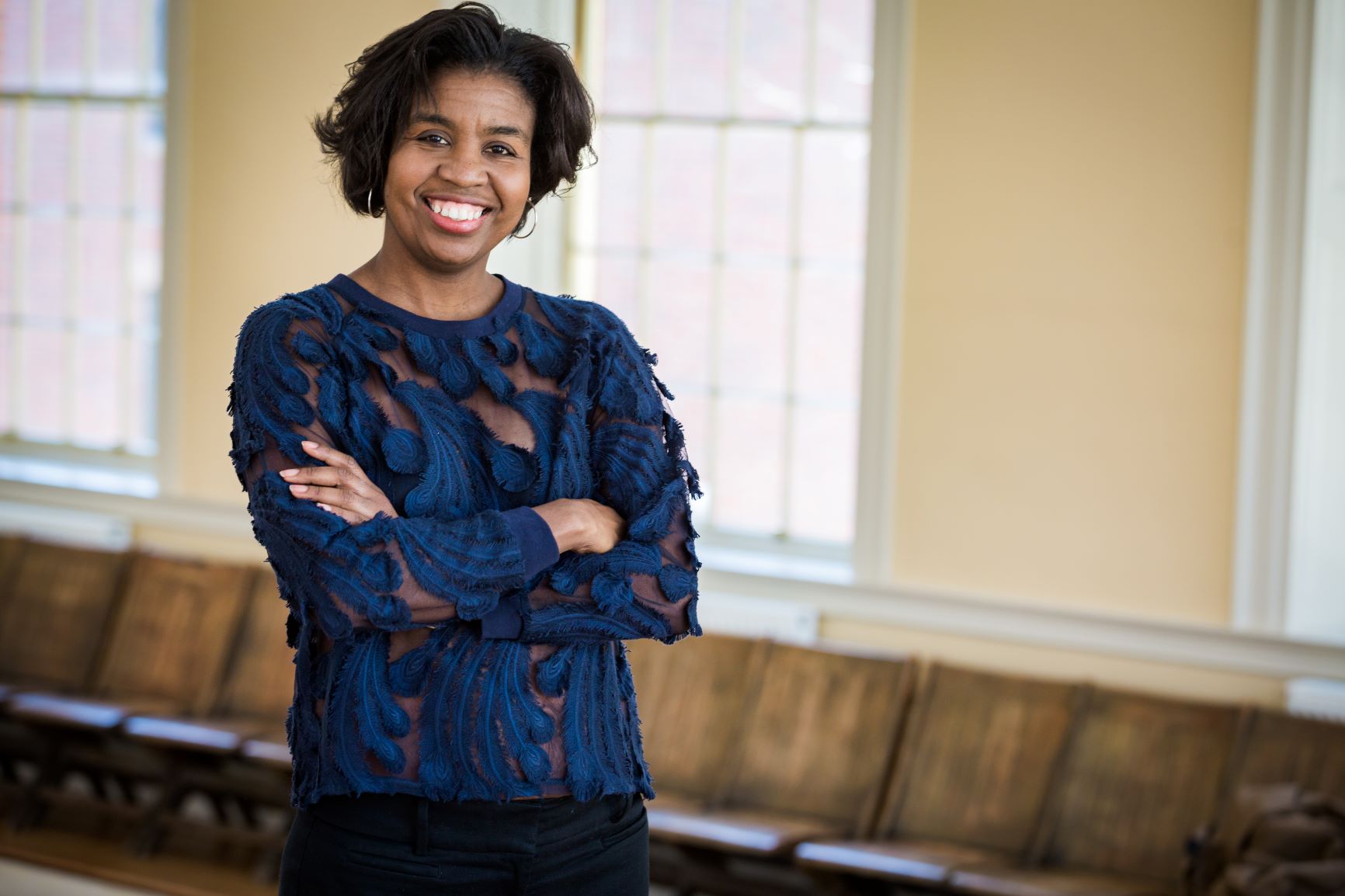
January Gill O’Neil – The Thursday Poets
View their Member Listing
January Gill O’Neil is an associate professor at Salem State University, and the author of Glitter Road (forthcoming 2024), Rewilding (2018), Misery Islands (2014), and Underlife (2009), all published by CavanKerry Press. From 2012-2018, she served as the executive director of the Massachusetts Poetry Festival, and currently serves on the boards of AWP and Montserrat College of Art. Her poems
SEE LISTING