Salem Witch Museum Unveils Seven New Artifacts Spanning Three Centuries of Witchcraft History
Historical acquisitions include rare books owned by Salem witch trials magistrate and evolving cultural representations from 1650 to 2008
Museum Expands Permanent Collection with Significant Historical Pieces
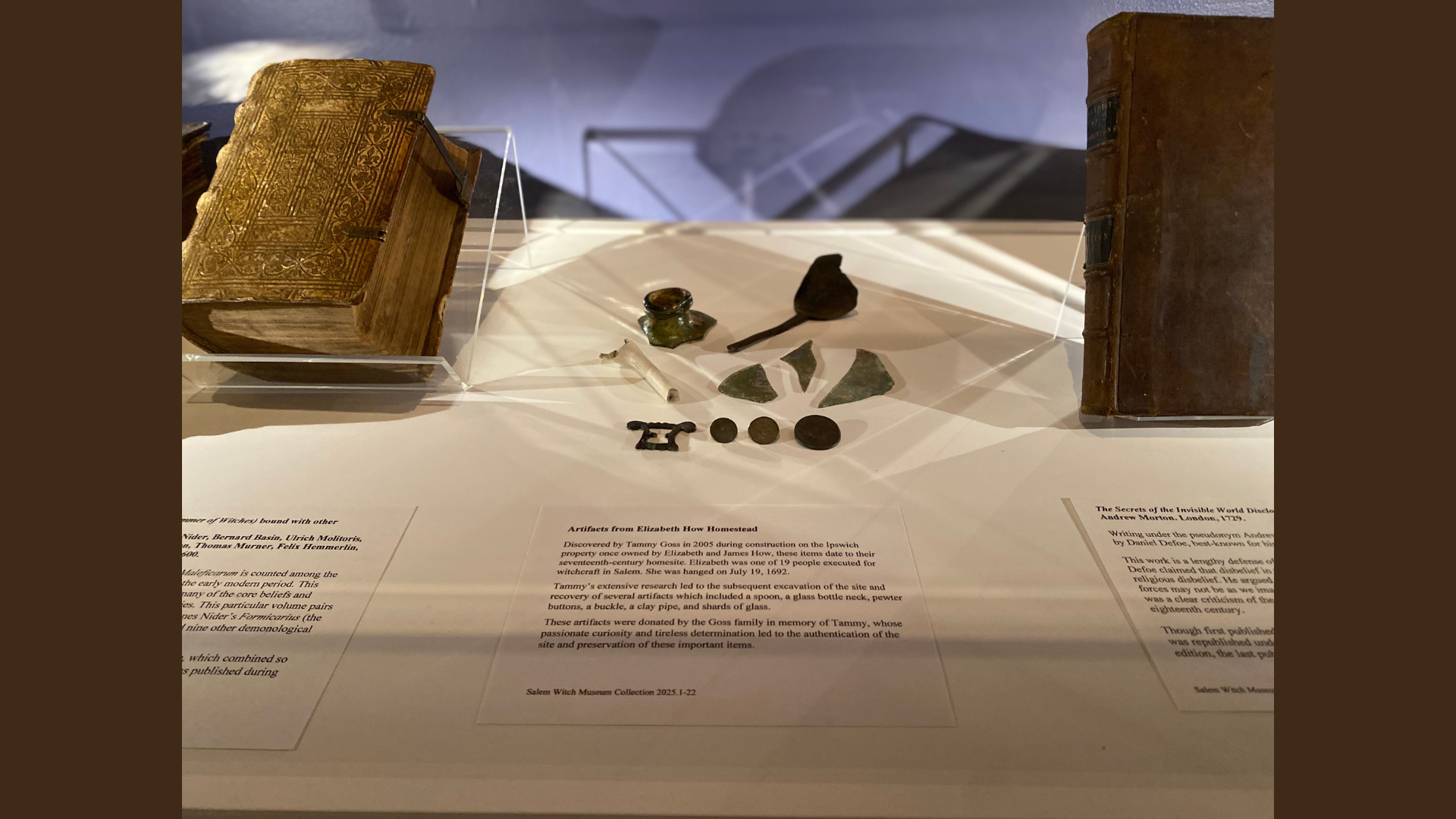
The Salem Witch Museum announced that seven new artifacts are now on display in the exhibit Witches: Evolving Perceptions. The acquisitions represent an important milestone in the museum’s ongoing series of renovations as it continues to build a permanent collection.
The new additions span more than three centuries of witchcraft-related history, from rare 17th-century texts directly connected to the Salem witch trials to 20th-century pop culture interpretations that demonstrate the evolving image of witches in American society.
Rare Books with Direct Salem Witch Trial Connections
Among the most historically significant acquisitions are two books with direct ties to the 1692 Salem witch trials:
Judge Samuel Sewall’s Bible Concordance
A 1650 edition of A Large and Complete Concordance to the Bible owned by Judge Samuel Sewall is now on display alongside other Salem trial artifacts. This verbal index to the Bible includes Samuel Sewall’s signature along with the date, April 30, 1717.
In 1697, Samuel Sewall became the first and only magistrate to apologize for his involvement in the witchcraft trials, making this personal artifact particularly significant to understanding the aftermath and legacy of the trials.
Cotton Mather’s Defense of the Trials
A 1693 edition of Reverend Cotton Mather’s The Wonders of the Invisible World offers a stark contrast to Sewall’s later remorse. The book offered a court-sanctioned account of the Salem witch trials. Originally published in the fall of 1692, this was the first edition published in London, offering details of the deadly witch panic to a transatlantic audience.
Early Modern Witchcraft Philosophy
The museum has also added a first edition, second printing, of English physician John Beaumont’s 1705 An Historical, Physiological and Theological Treatise of Spirits, Apparitions, Witchcrafts, and other Magical Practices to its collection of early modern witchcraft texts. This work firmly defended the existence of spirits and the reality of witchcraft, includes personal anecdotes of supernatural contact from the author, and contains a peculiar hand-drawn sinister figure in ink.
The Evolving Image of the Witch
In addition to these early modern texts, several items relating to the evolving image of the witch have also been added to the exhibit, demonstrating how cultural perceptions shifted dramatically over the 20th century:
- October 1923 edition of Life magazine – Features a beautiful young witch astride a vacuum, reflecting changing portrayals of witches in American media
- 1960 Wendy the Good Little Witch comic book – Represents the domestication and child-friendly reinterpretation of witch imagery
- 1987 cast-signed production information packet for The Witches of Eastwick – Documents the feminist reimagining of witchcraft in modern cinema
- 2008 Wicked Witch of the West Barbie – Demonstrates the complete transformation of the witch from feared figure to collectible pop culture icon
Part of Ongoing Museum Renovations
The new artifacts are being displayed as part of the museum’s ongoing series of renovations. The additions mark an exciting step forward in developing a comprehensive permanent collection that traces both the historical reality and cultural mythology surrounding witches and witchcraft.
The Witches: Evolving Perceptions exhibit now offers visitors a unique opportunity to see authentic historical documents from the Salem witch trials era alongside artifacts that trace how the image of the witch transformed from a terrifying accusation into a symbol of empowerment and even whimsy in popular culture.
Media Contact:
Rachel Christ-Doane, Director of Education
Salem Witch Museum
Phone: 978-744-1692
Email: rachelc@salemwitchmuseum.com
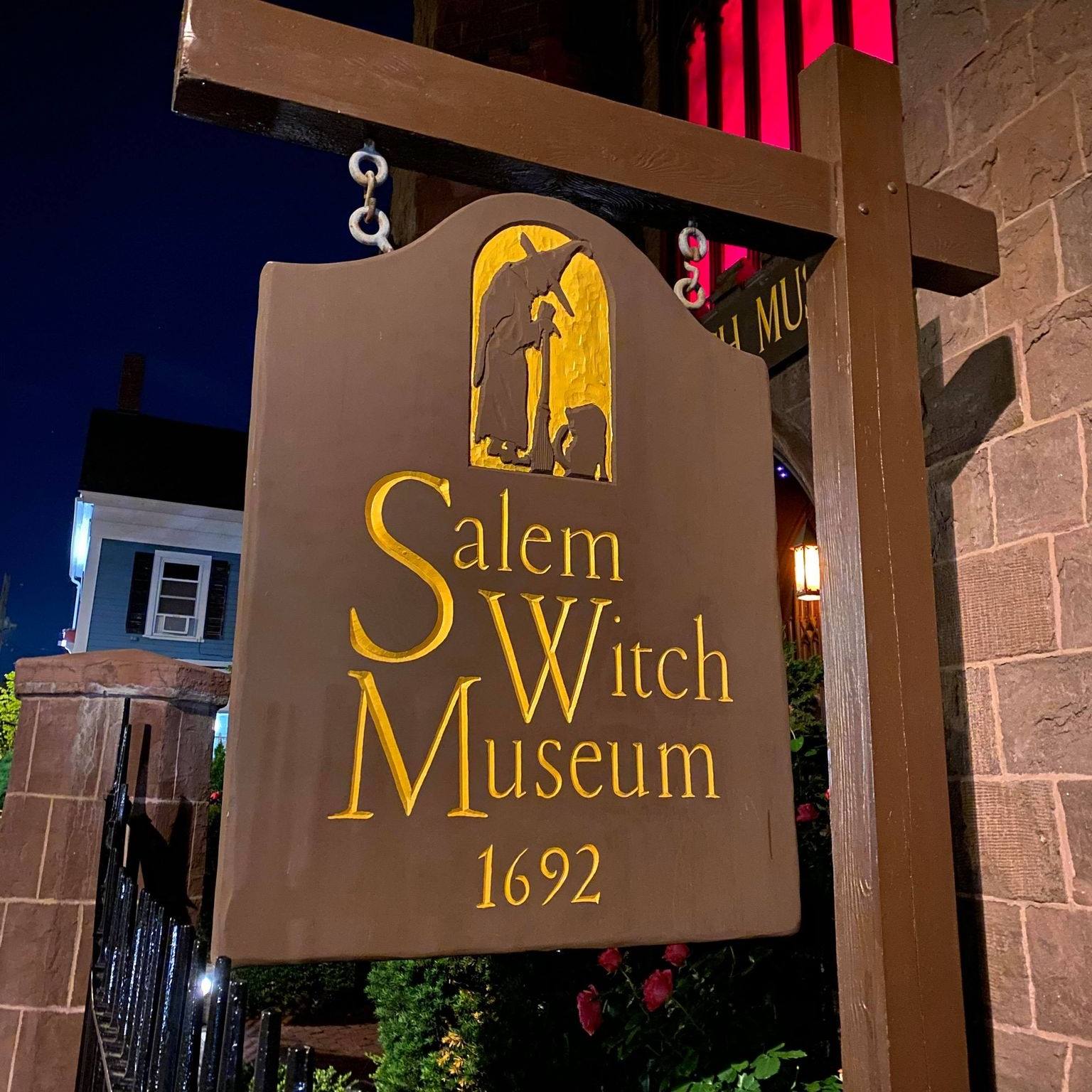
Salem Witch Museum | Historic Museum & Educational Center
View their Member Listing
The Salem Witch Museum examines one of the most enduring and emotional events in American History, the Salem witch trials of 1692. The museum consists of two presentations. The first provides an immersive look into the events of 1692. Visitors experience the drama of that dark time though thirteen life-size stage sets, figures, lighting and narration as they are witness
SEE LISTING