
Why simply Showing Up Is The Best Thing We Can Do

Salem Arts Festival in Salem draws over 10,000 people and pays out over 100 performers over three days in Salem MA. Photo Creative Collective
The average American now spends 35 minutes a day socializing in person. Not 35 minutes with friends, specifically — 35 minutes with another human being, in a shared room, breathing the same air. That number is down from 38 minutes in 2019, and it never recovered after the pandemic (Generation Tech, citing BLS American Time Use Survey, September 2025). For 15‑to‑24‑year‑olds, in‑person time with friends has collapsed by nearly 70% over two decades, from roughly 150 minutes a day in 2003 to about 40 in 2020 (U.S. Surgeon General’s Advisory, “Our Epidemic of Loneliness and Isolation,” 2023). In 2024, for the first time in the American Time Use Survey’s 21‑year history, adults over 50 spent more time socializing in person than teenagers and young adults did.
This is not a vibe. It is a measurable, longitudinal collapse of the most basic human act: showing up.
And it is happening at the exact moment three other things are happening — all of them designed, intentionally or not, to keep us home, alone, and quiet. AI companion apps are surging 700% in three years. The federal government has proposed to eliminate the National Endowment for the Arts, the National Endowment for the Humanities, and the Institute of Museum and Library Services in a single budget. And trust in nearly every shared civic institution is in long‑term free fall.
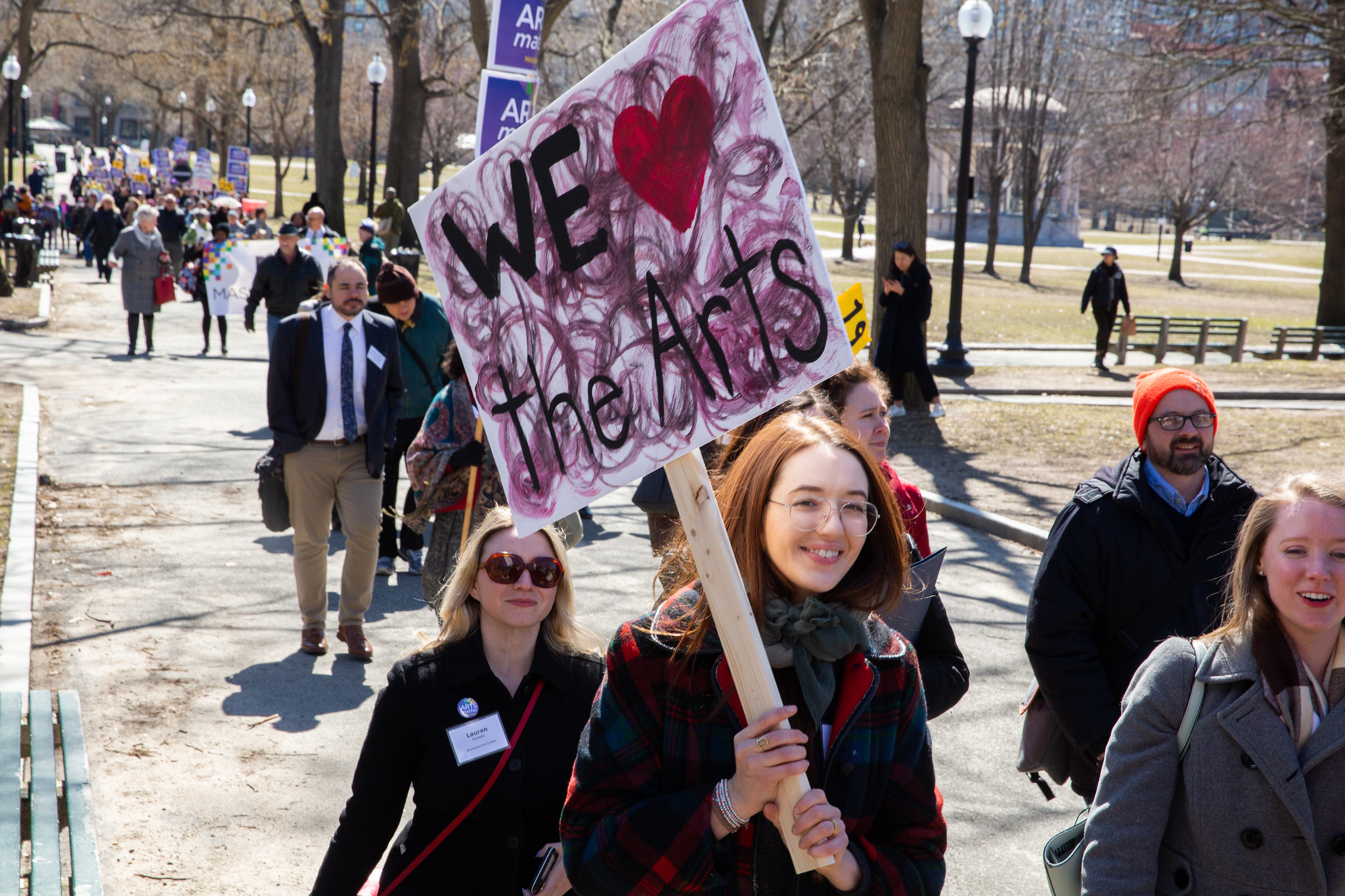
In a moment like this, gathering in public is not a hobby. It is an act of creative non‑compliance.
Why this matters — the short version:The radical power of gathering is a simple proposition. In a moment of measurable social collapse, the act of showing up in public with other humans is no longer neutral. It is an act of creative non‑compliance. Face‑to‑face time has fallen to a 35‑minute daily low. AI companion apps are surging 700%. Federal arts funding is being dismantled. Trust in shared civic institutions is in free fall. Against that backdrop, third places — cafés, libraries, theaters, festivals, mural tours, town squares — are not amenities. They are social infrastructure. They are predictive of who lives and dies in a crisis, who trusts their neighbors, and who turns out to vote. On the North Shore of Massachusetts, gathering is also the engine of the small‑business economy.
Essex County’s cultural economy drives more than $1.2 billion in annual tourism spending. The state’s arts sector accounts for 4.2% of GDP. Showing up is the move.
1. The 35‑Minute Society: Why Has Face‑to‑Face Time Collapsed?
The Surgeon General’s 2023 advisory put a number on what the body already knew: lacking social connection raises the risk of premature death by as much as smoking up to 15 cigarettes a day (HHS, 2023). Roughly half of U.S. adults report experiencing loneliness. Seventeen percent now say they have no close friends, up from 12% in 2021 (Survey Center on American Life, “Disconnected,” August 2024). Only 30% of Americans say they know all or most of their neighbors. Church and religious community membership fell from 70% in 1999 to 47% in 2020.
The hours haven’t disappeared — they have migrated. Gallup data shows U.S. teens spent an average of 4.8 hours per day on social media by 2023, and the CDC’s 2023 Youth Risk Behavior Survey found that 39.7% of high school students experienced persistent sadness or hopelessness and 20.4% seriously considered suicide (CDC YRBS, 2024). Depression among college students rose 134% and anxiety 106% between 2010 and 2020 (Harvard T.H. Chan, March 2024). The numbers track almost exactly with the smartphone curve.
What the time and the loneliness used to be spent on — block parties, theaters, libraries, choir practice, the public square — is what we are now being asked to fund less of.
2. The AI Friend Problem
Into that vacuum, an entire industry has rushed in to sell us frictionless intimacy. The number of AI companion apps grew 700% between 2022 and mid‑2025. Character.AI alone has 20 million monthly users, more than half under the age of 24 (APA Monitor, January 2026). A Harvard Business Review analysis found that therapy and companionship are now the top two reasons people use generative AI. A Center for Democracy and Technology survey from October 2025 found that nearly one in five students reported having had — or knowing a friend who had — a romantic relationship with an AI.
A joint OpenAI–MIT Media Lab study found that heavy daily use of AI companions correlated with increased loneliness, even as moderate use reduced it (APA Monitor, 2026). Stanford psychiatry researchers documented AI companions routinely eliciting inappropriate dialogue about self‑harm with minors. A 14‑year‑old died by suicide after an intense emotional bond with a chatbot. Common Sense Media has declared that social AI companions pose “an unacceptable risk to youth under 18.”
Here is the part worth sitting with: an AI companion is engineered to remove every form of friction that a real relationship contains. It is always available. Never bored. Never inconvenient. Never disagrees in a way that costs you something. It is, in a literal sense, the opposite of a film festival, a mural tour, a town meeting, a Saturday morning farmers market — all of which require you to leave the house, encounter people who are not you, and tolerate the small frictions of being a person among other people.
3. The Friday Night Massacre
On the evening of May 2, 2025 — hours after the Trump administration released a proposed FY2026 budget calling for the complete elimination of the NEA, NEH, and IMLS — hundreds of arts organizations across the country received emails terminating their grants. American Theatre called it “a Friday night massacre.” By early counts, roughly 560 NEA grants were canceled, totaling more than $27 million in rescissions (PBS NewsHour, June 2025). MASSCreative reported that over half of all open NEA awards nationally were terminated (MASSCreative, May 2025).

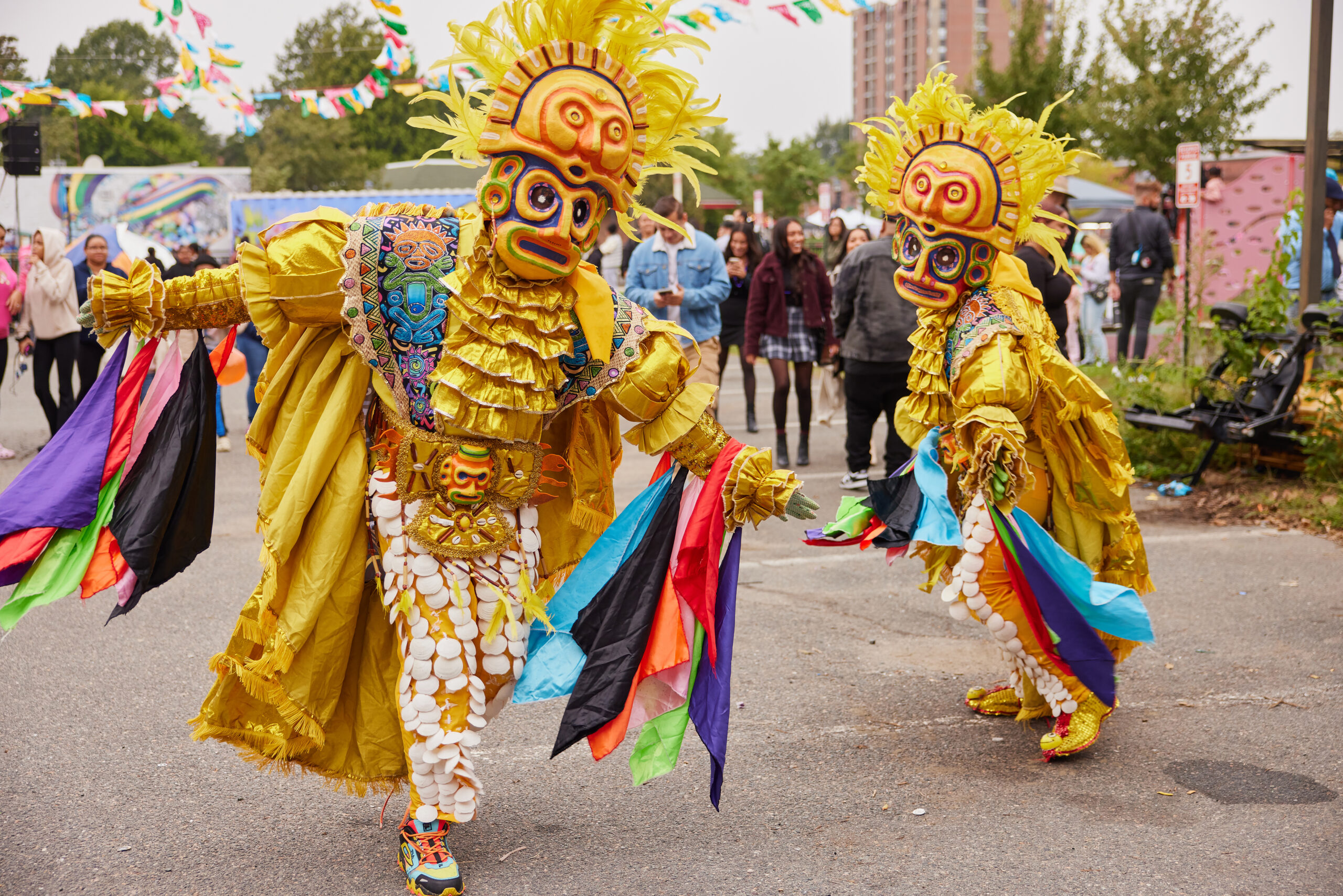
Cultura Latina Dance Academy Performs at the Peabody International Festival
The NEA’s entire FY25 budget was $210 million. That is 0.0031% of the federal budget — about 62 cents per American (Arts Action Fund Massachusetts).
In Massachusetts, the cuts landed immediately. Castle of Our Skins lost $20,000 for the MassQ Ball. BalletRox in Jamaica Plain lost $30,000 — 10% of its next fiscal year budget, threatening its scholarship program for Boston Public Schools students. Boston Center for the Arts lost $50,000, affecting an incoming residency of 50+ artists. MASS MoCA lost three federal awards in the same week: a $50,000 NEA grant, a $101,000 IMLS grant, and an NEH grant on top. Filmmakers Collaborative in Melrose lost a $50,000 NEH installment for a documentary plus an NEA grant funding a youth film program in Roxbury, Mattapan, and Lowell (WBUR, May 7, 2025).
Over the last five years, the NEA has sent $35.5 million to Massachusetts organizations directly or through state partners (NEA Massachusetts State Profile). Mass Cultural Council, the primary state backstop, is operating on a $26.85 million state appropriation in FY25 (Mass Cultural Council, August 2024). The state cannot come close to backfilling a federal hole that large.
And the cuts are not the whole story. Grantees who remain are now required to certify that they “do not operate any programs promoting diversity, equity and inclusion.” At least one organization — the Arts Center of the Capital Region in Troy, NY — turned down a $50,000 NEA grant rather than sign. That is the chilling effect built into the system: don’t program anything that might cause a future check to disappear.
As MASSCreative’s Emily Ruddock put it, “It’s not just our name-brand global ambassador arts organizations. It’s organizations that are making sure your kid has access to a music lesson after school. It’s organizations that are hosting festivals on the weekends…that animate our neighborhoods and our main streets and city centers. Everyone is going to be affected by this.”
4. The Economy Nobody Calls an Economy: How Does Gathering Drive the Local Economy?
There is a habit in policy conversations of treating arts, festivals, and small cultural venues as nice‑to‑have amenities — a category separate from “the real economy.” The numbers say otherwise.
Arts and cultural production in Massachusetts is a $27.2 billion industry, representing 4.2% of state GDP and 135,181 jobs — larger than retail (Arts Action Fund / BEA). Nationally, the sector hit $1.17 trillion in 2023 (Bureau of Economic Analysis ACPSA, April 2025).
But the more useful number for a Main Street is from Americans for the Arts’ AEP6 study. When someone attends a cultural event, they make an outing of it. They eat. They park. They shop. They stay over. The typical attendee spends $38.46 per person, per event beyond the cost of admission — $29.77 for locals and $60.57 for non‑local visitors (AEP6, 2023). Seventy‑seven percent of non‑local attendees say attending the cultural event was the primary purpose of their trip.

@golden305 takes a selfie with a youth group from Lynn with Beyond Walls. Photo by Creative Collective
Zoom into the North Shore and the story sharpens. Essex County generated $1.195 billion in total travel and tourism spending in 2024 — about $1,450 per resident, 5% of statewide tourism (Impact Essex County / MOTT). In Salem alone, visitors spent $144 million in 2023, directly supporting 1,212 jobs and $36.6 million in wages. October 2024 set a record with 1,040,600 visitors in a single month, and Halloween Day brought 87,351 visitors in 24 hours (Destination Salem, 2025). The 98% downtown storefront occupancy rate Salem currently enjoys is, by the mayor’s own framing, tourism‑driven (CommonWealth Beacon, October 2025).
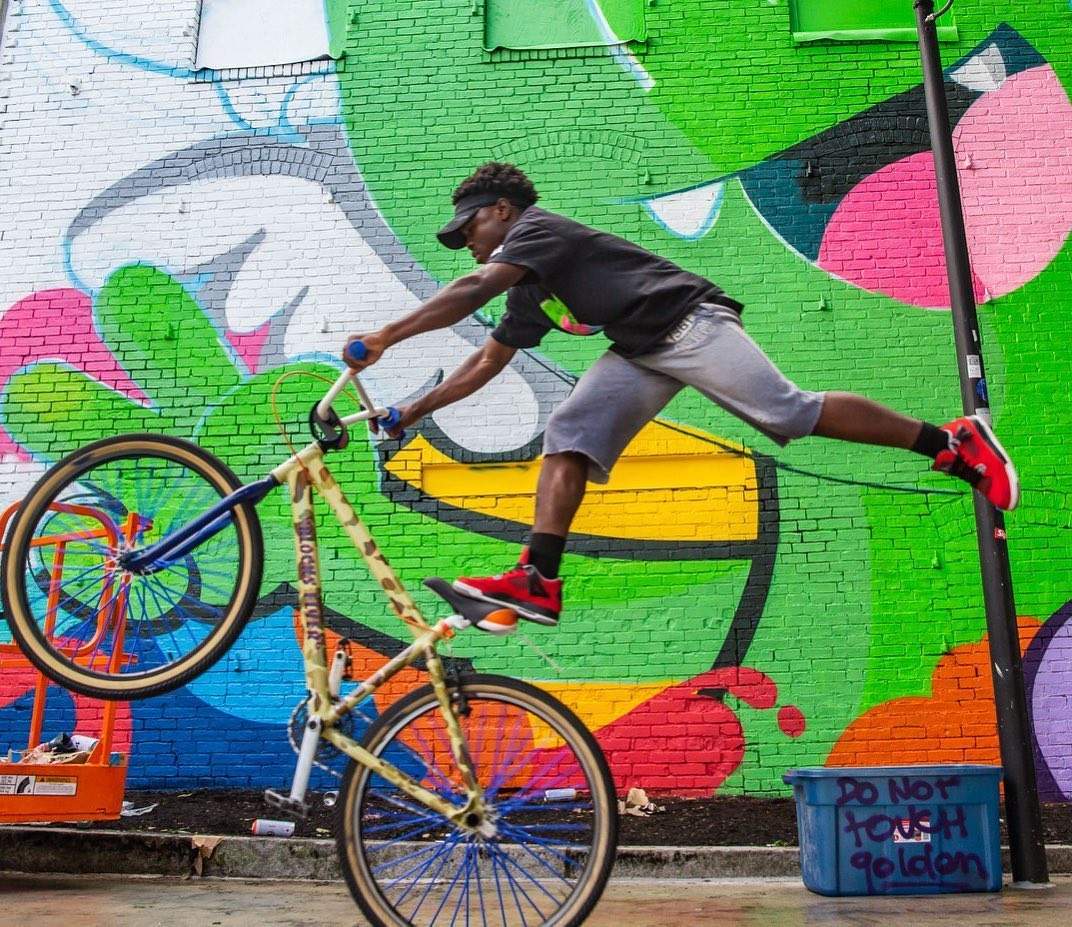
Lynn tells the same story in a different key. When Beyond Walls produced its inaugural mural festival in 2017, it drew more than 5,000 visitors and 4.5 million social media impressions to a downtown that had been written off for decades (Center for Community Progress, 2023). Today, downtown Lynn is a Massachusetts Cultural District, and Beyond Walls’ placemaking model has expanded to 11 Massachusetts cities.
And 2026 is shaping up to be the biggest gathering year Massachusetts has seen in a generation. Seven FIFA World Cup matches at Gillette Stadium are projected to attract 450,000 visitors and generate more than $1 billion in economic impact, including $60 million+ in tax revenue (WBUR, August 2025). Sail Boston is expected to bring 7 million participants over six days in July, generating roughly $140 million in spending. And the state is deploying $20 million toward MA250, the 250th anniversary of the American Revolution — with North Shore programming including a free Revolution exhibit at The Cabot in Beverly through July 4 (MA250 Events).
The pattern is unmistakable. When you fund a festival, you are funding every restaurant within walking distance. When you cancel an NEA grant, you are pulling a table out of every café downtown. The arts sector, the tourism sector, the small business sector, the hospitality sector — they are not separate columns on a spreadsheet. They are the same Friday night.
5. Third Places, Trust, and the Mechanics of Democracy: What Are Third Places?
In 1989, sociologist Ray Oldenburg coined the term “third place” — the spaces beyond home and work where casual, repeated, voluntary gathering happens. Cafés. Libraries. Theaters. Barbershops. Community centers. Bookstores. Town greens. Oldenburg called them “vessels of friendship, citizenship, and the everyday practice of pluralism.”

Kevin and Ryn Grant, owners of The Castle in Beverly, a restaurant/bar and board game cafe.
In 2018, NYU sociologist Eric Klinenberg expanded the frame in Palaces for the People, arguing that these spaces are “social infrastructure” — the built environment that sustains democratic life. His most chilling evidence comes from the 1995 Chicago heat wave: neighborhood social connectedness, as measured by the presence of active third places, was the single strongest predictor of who lived and who died (Stanford CASBS).
The contemporary data backs it up. The Survey Center on American Life found that 21% of Americans now live in communities with zero access to any of 10 measured civic infrastructure spaces. Forty‑nine percent never visit a park. Sixty‑three percent never visit a library (Survey Center on American Life, August 2024). And the equity gap is brutal: Americans with only a high school education are twice as likely to live in communities with no civic infrastructure at all.
There is also a strikingly direct line from gathering to trust. The same survey found that Americans who walk their neighborhood at least once a week are nearly twice as likely to say they generally trust people — 39% versus 21% for those who never walk. Regular park and library users are significantly more likely to speak with strangers, attend civic events, and vote. The Urban Institute notes plainly that “the decline of third places in recent years has also coincided with rising loneliness in US cities and a weakened sense of well‑being in communities” (Urban Institute, July 2024).
Trust in shared institutions is now collapsing in real time. Gallup’s 2025 confidence survey found that majorities of Americans express confidence in only three institutions: small business (70%), the military (62%), and science (61%). Nothing civic. Nothing cultural. Nothing governmental (Gallup, July 2025). Generalized social trust between Americans fell from roughly 45% in 1972 to 30% by 2016 (HHS, 2023).
If you wanted to engineer a less governable country, you could not design a better system: defund the libraries, cancel the festivals, close the third places, and replace them with feeds and chatbots that flatter you and never disagree.
6. Art, Gathering, and the Authoritarian Playbook
There is a reason every authoritarian movement of the last hundred years has gone for cultural institutions first. As fascism rose in interwar Europe, philosophers and art historians from across the political spectrum — Walter Benjamin on the left, Ernst Gombrich on the liberal humanist side — converged on the same insight: the autonomous pursuit of art, scholarship, and shared memory is a “political weapon” against totalitarian appropriation (MIT Press, 2021).
The Center for American Progress’s April 2025 report on authoritarian consolidation makes the modern pattern plain: it always involves “tightening control over media, universities, and cultural institutions” until “the democratic space” narrows enough that opposition becomes functionally impossible (CAP, April 2025). In the current moment, the moves against the Kennedy Center, the NEA, the NEH, and the IMLS — including the firing of roughly 40 Kennedy Center staff, the cancellation of Hamilton‘s 2026 run, and the cancellation of Pride Month programming — fit the pattern exactly.
The Ford Foundation, no firebrand institution, said it cleanly in December 2025: “One of the most significant threats to the American experiment is the decline of shared civic institutions… libraries, parks, schools, and houses of worship that once fostered the social trust required for collective action” (Ford Foundation).
This is why gathering itself is political. When bodies share a room — at a Salem Film Fest screening, a Punto Urban Art Museum walking tour, a Cabot performance, a block party in Lynn, a town meeting in Beverly — they practice the fundamental act of democratic pluralism: encountering difference, negotiating shared space, and affirming that the public still belongs to the public.
Authoritarian regimes cancel festivals and close libraries. The democratic response is to show up anyway.

Salem Jazz and Soul Festival at the Salem Willows. Photo by Creative Collective
7. The North Shore Has the Infrastructure. We Just Have to Show Up.
Essex County is, by national standards, absurdly well‑equipped for this moment. The Peabody Essex Museum has been operating continuously since 1799. Punto Urban Art Museum has turned Salem’s Point neighborhood into one of the largest outdoor mural collections in New England — a textbook case of art transforming chronically underinvested public space into a site of civic pride. Salem Film Fest is now in its second decade. Salem Arts Festival, Haunted Happenings, Beyond Walls in Lynn, The Cabot in Beverly, St. Peter’s Fiesta and Gloucester Stage Company in Gloucester — these aren’t peripheral amenities. They are the connective tissue of the regional economy and the regional civic life.
That tissue is what Creative Collective spends its days building. CC is the ecosystem builder for Essex County — connecting tourism, arts, small business, hospitality, retail, and city hall into a single working network, with alost 400 members operating inside it. We don’t just support businesses one at a time; we build the conditions that make a whole region of entrepreneurs, makers, and small businesses thrive. You can learn more about us here.
But the infrastructure only works if it’s used. A library is just a building if no one walks in. A festival is just a permit if no one shows up. A mural is just paint if no one stops to look.
8. The Bottom Line: Why Gathering Is the Move
The next time someone asks whether attending a small festival, a mural tour, a documentary screening, a library reading, or a Main Street block party “really matters,” the honest answer is a stack of receipts.
It matters because face‑to‑face time has collapsed to 35 minutes a day, and showing up is how we put minutes back on the board.
It matters because the loneliness epidemic is killing people at a rate comparable to 15 cigarettes a day, and shared rooms are the medicine.
It matters because AI companions are being engineered, right now, to replace the friction of real relationship with the convenience of a feed, and the only counter‑move is to choose the friction.
It matters because the federal government is in the middle of dismantling the funding infrastructure that makes much of this possible, and every ticket bought, donation made, and seat filled is a vote that this stuff is worth keeping.
It matters because the typical arts attendee drops $38.46 at the restaurant, the parking garage, and the shop next door — and the small business economy of Essex County runs on exactly that math.
And it matters because gathering, in a moment defined by isolation, defunding, and engineered absence, is itself an act of creative non‑compliance. It is the choice to be present, in public, with other people, when nearly every economic and technological force in our environment is pulling the other way.
The most radical thing you can do this weekend is leave the house and show up somewhere with other humans. Then do it again the next weekend. Then bring someone.
That is how an ecosystem stays alive

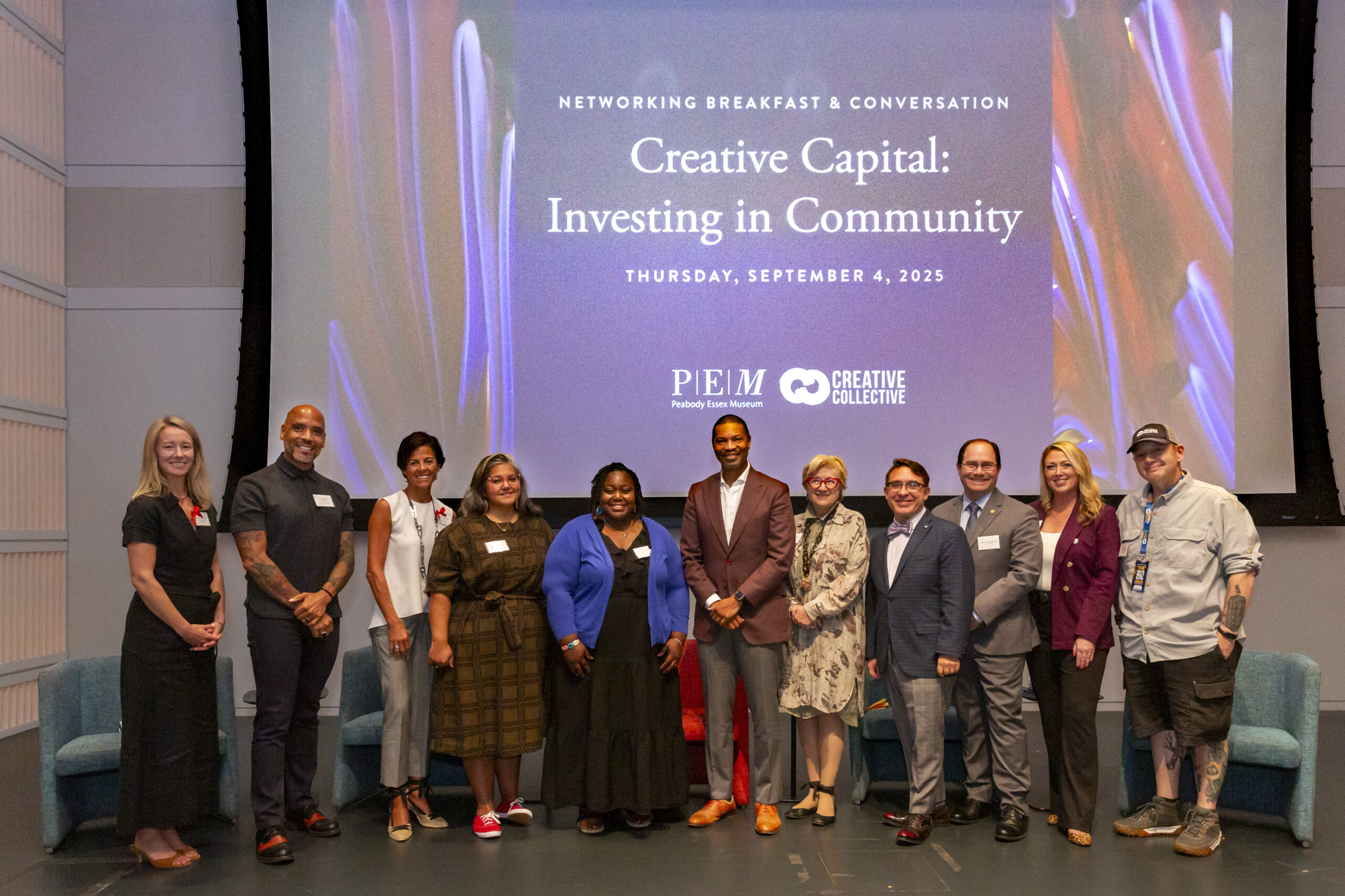
Peabody Essex Museum hosted a dynamic meetup of community and Creative Collective members for the re-opening of the the East India Marine Hall
Frequently Asked Questions
What is a “third place,” and why does it matter?
A third place is a public or semi‑public space outside the home and the workplace — cafés, libraries, theaters, parks, community centers, barbershops, town greens — where casual, repeated, voluntary gathering happens. Sociologist Ray Oldenburg coined the term in 1989, calling these spaces “vessels of friendship, citizenship, and the everyday practice of pluralism.” NYU sociologist Eric Klinenberg later reframed them as “social infrastructure” — the built environment that sustains democratic life.
Why does in‑person gathering matter for democracy and trust?
Sustained third‑place gathering builds the social trust that democratic systems require to function. According to the Survey Center on American Life, Americans who walk their neighborhood weekly are nearly twice as likely to say they trust other people (39% vs. 21%). Regular park and library users vote more often, attend more civic events, and speak with strangers more readily.
How did the May 2025 NEA cuts affect Massachusetts?
On May 2, 2025, the federal government terminated roughly 560 NEA grants nationally, totaling more than $27 million. Massachusetts organizations including MASS MoCA, Boston Center for the Arts, BalletRox, Castle of Our Skins, and Filmmakers Collaborative lost six‑figure awards. MASSCreative reported that over half of all open NEA awards nationally were canceled. The state’s $26.85 million Mass Cultural Council appropriation cannot backfill that federal hole.
What is the economic impact of attending a local arts event?
According to Americans for the Arts’ AEP6 study, the typical cultural attendee spends $38.46 per person, per event beyond admission — covering food, parking, and shopping nearby. Non‑local visitors average $60.57. Seventy‑seven percent of non‑local attendees say attending the cultural event was the primary purpose of their trip. The arts sector and the small business economy are not separate columns on a spreadsheet.
What can I do on the North Shore to support the power of gathering?
Show up. Buy tickets to Salem Film Fest, Salem Arts Festival, The Cabot, and Gloucester Stage Company. Take a Punto Urban Art Museum mural tour in Salem’s Point neighborhood. Attend Beyond Walls events in Lynn. Use your library. Bring a friend the second time. Every filled seat is a vote that the region’s cultural infrastructure stays alive — and that the small businesses surrounding it stay open.
Sources
Loneliness, isolation & in-person time
- U.S. Surgeon General’s Advisory: Our Epidemic of Loneliness and Isolation (HHS, 2023)
- Generation Tech — Americans Are Still Socializing Less (BLS American Time Use Survey, Sept 2025)
- Survey Center on American Life — “Disconnected: Places and Spaces” (Aug 2024)
Youth mental health
- CDC Youth Risk Behavior Survey, 2023 (MMWR Supplement, 2024)
- Harvard T.H. Chan School of Public Health — How to Calm the Anxious Generation (March 2024)
AI companions
NEA / arts defunding
- PBS NewsHour — Local Arts Groups Face Budget Gaps as NEA Pulls Grants (June 2025)
- MASSCreative — NEA Grant Cuts (May 2025)
- WBUR — Mass Arts Organizations React to NEA Funding Cuts (May 7, 2025)
- NEA — Massachusetts State Profile
- Mass Cultural Council — FY25 Spending Plan (Aug 2024)
- Arts Action Fund — Massachusetts Arts Fact Sheet
Economic impact of arts & events
- Americans for the Arts — Arts & Economic Prosperity 6 (AEP6, 2023)
- Bureau of Economic Analysis — Arts and Cultural Production Satellite Account, 2023 (April 2025)
- Impact Essex County — Tourism Spending (MOTT data)
- Destination Salem — 2025 Annual Meeting Presentation
- CommonWealth Beacon — The Profit and Price of October in Salem (Oct 2025)
- Center for Community Progress — Beyond Walls Mural Festival (2023)
- WBUR — Boston Tourism, World Cup, America250, Sail Boston (Aug 2025)
- Massachusetts 250 — Events
Third places, social infrastructure & civic trust
- Stanford CASBS — Palaces for the People (Eric Klinenberg)
- Urban Institute — How Third Places Contribute to Thriving Communities (July 2024)
- Gallup — Confidence in Institutions (July 2025)
Democracy, dissent & cultural institutions
- MIT Press — Art and Scholarship in Moments of Historical Crisis (2021)
- Center for American Progress — How Democracies Defend Themselves Against Authoritarianism (April 2025)
- Ford Foundation — Statement on Civic Institutions (Dec 2025)
About the author: John Andrews is the Founder of Creative Collective, the Essex County ecosystem builder connecting tourism, arts, small business, hospitality, and civic life across the North Shore of Massachusetts. He has spent more than a decade documenting and supporting the region’s third places, festivals, and cultural infrastructure as the connective tissue of a regional economy.
This story comes from the Creative Collective community — Essex County businesses who believe when we thrive together, our whole region becomes more vibrant. We’re entrepreneurs, creators, and service providers across all industries, collaborating to build the community we want to be part of. If you see your business as more than just commerce — as a way to contribute to our regional ecosystem — you belong here. Discover how to join our community →
Beyond Walls | Public Art & Placemaking Agency
View their Member Listing
Beyond Walls is a non-profit placemaking agency that uses a creative lens to address community needs. We are a diverse group that believes cities best thrive when they are full of art and have engaged stakeholders and active spaces. Our work revolves around our mission to activate spaces to strengthen communities. How do we do this? We introduce public art
SEE LISTING