Salem Athenaeum to Unveil Archival Reproduction of the 1629 Massachusetts Bay Charter
What’s Happening
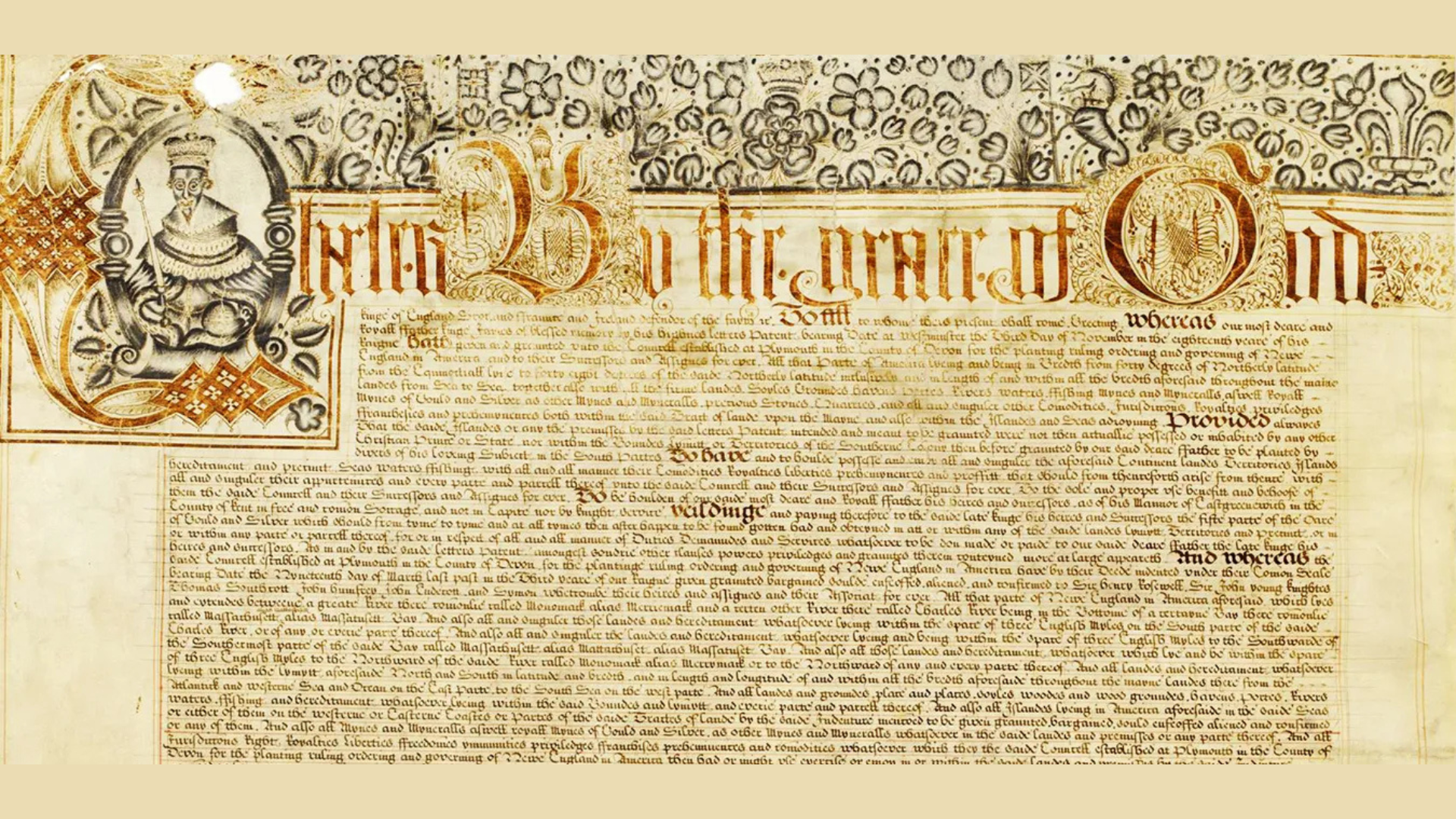
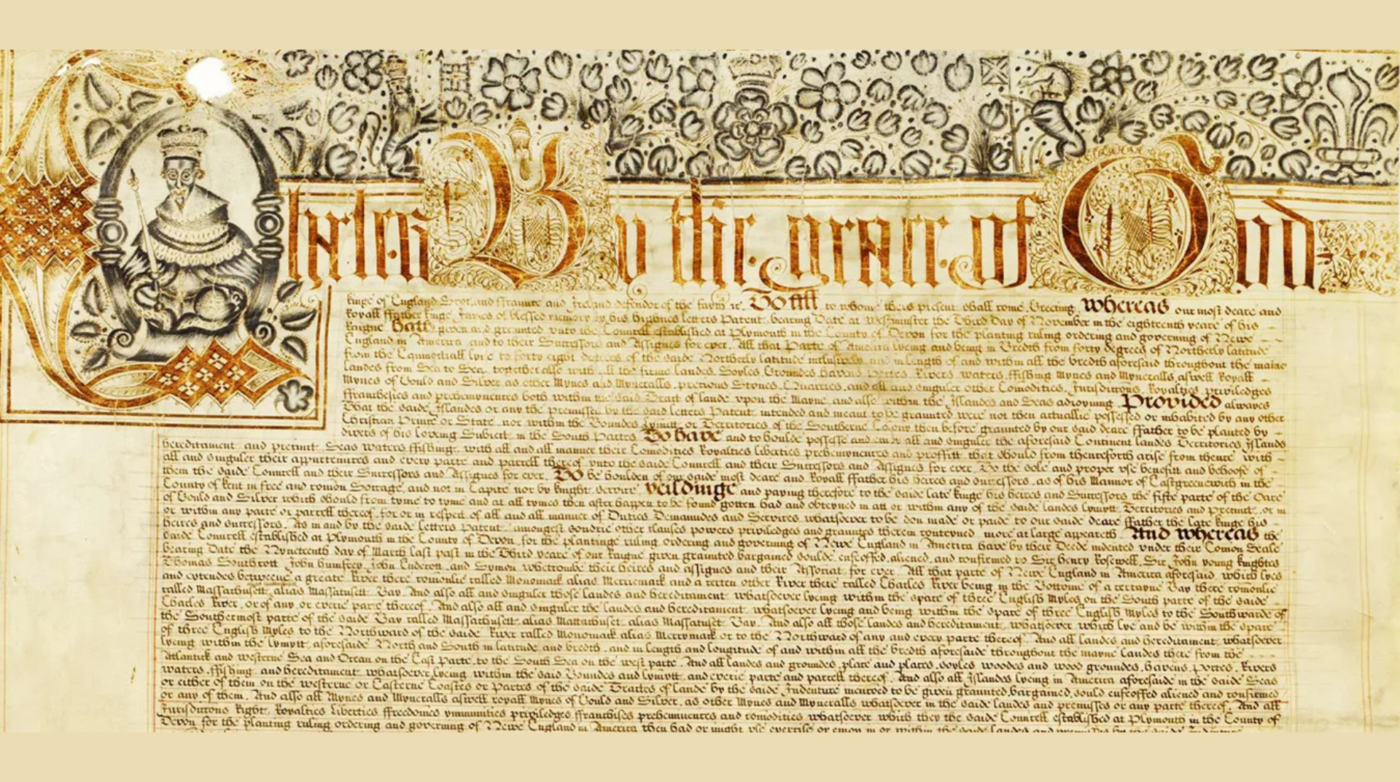
On Saturday, September 19, 2026, the Salem Athenaeum will unveil a newly created archival reproduction of the 1629 Charter of the Governor and Company of the Massachusetts Bay in New England. This four-panel reproduction is commonly known as the Endecott Charter. The event is part of Salem’s quadrecentennial. It opens with a reception at 4:00 p.m. and continues with a presentation at 5:00 p.m. at the Salem Athenaeum. Admission is free and open to the public. However, the Athenaeum requires advance registration.
About the Charter
King Charles I granted the charter on March 4, 1629. It established the Massachusetts Bay Colony and provided the legal framework for its government. As a result, the colony gained an unprecedented degree of self-government. Historians therefore regard the charter as one of the most important documents in early American political history.
The Salem copy, known as the Endecott Charter, arrived in Naumkeag (present-day Salem) on June 23, 1629. Governor John Endecott received it there. The charter then remained in Massachusetts until Leverett Saltonstall donated it to the Salem Athenaeum in 1810.
Program Speakers
The program will feature a conversation between historians Charlie Newhall (St. John’s Prep) and Emerson “Tad” Baker (Salem State University). Together, they will examine the charter’s provenance and its influence on American constitutional development.
Jean Marie Procious, Executive Director of the Salem Athenaeum, said: “Few documents connect Salem so directly to the larger story of American democracy. We are honored to preserve this extraordinary artifact and to share its history with the public as part of Salem 400+. This event invites our community to reflect on how a document granted nearly 400 years ago continues to resonate today.”
Charlie Newhall, past president of the Salem Athenaeum, said: “The story of the Endecott Charter is every bit as fascinating as the text itself. This document crossed the Atlantic at a pivotal moment in history, and survived centuries of political change and stewardship. Its preservation allows us to trace a direct connection between the founding of Massachusetts Bay and the community that continues to cherish its legacy today.”
Emerson “Tad” Baker said: “The Massachusetts Bay Charter helped establish ideas that remain central to American civic life: government under a written framework, representative leadership, and the expectation that people should have a voice in how they are governed. While the charter belonged to a different era, its influence can still be seen in the constitutional traditions and democratic institutions that shape our lives today.”
The conversation will also examine how colonists interpreted the charter as a guarantee of local authority and political rights. That interpretation, in turn, helped foster traditions of representative government. Those traditions later influenced state constitutions and the United States Constitution. Afterward, the program concludes with an audience question-and-answer session.
About the Reproduction
In recognition of the document’s significance, the Athenaeum commissioned a museum-quality archival reproduction. The project also reflects its broader commitment to preserving and sharing Salem’s history. The Athenaeum will install the reproduction after the event, and it will remain on permanent exhibition afterward. As a result, visitors will be able to experience the document’s beauty and significance. Meanwhile, the Athenaeum will keep the original manuscript safe for future generations.
Event Details
Chartering a Path to Independence Saturday, September 19, 2026 Reception: 4:00 p.m. Presentation and Discussion: 5:00 p.m. Salem Athenaeum, 337 Essex Street, Salem, MA
The Athenaeum has limited seating for the in-person event, but online attendance is also available. Register here or visit salemathenaeum.net for more information.
About the Salem Athenaeum
The Salem Athenaeum was incorporated in 1810. Today, it operates as an independent membership library and cultural center. It hosts lectures, concerts, plays, and discussion groups. It also offers author and poetry readings, storytelling, and workshops for readers and writers, plus literary social events. In addition, the Salem Athenaeum serves as the primary presenter of the Salem Literary Festival.
Library holdings include a contemporary circulating collection of fiction, non-fiction, and children’s literature. They also include historical research collections in literature for adults and children. Additionally, the collection covers natural sciences, political and social sciences, theology, and travel.