
Dr. Marquis Victor walked to the front of the room before a single data slide hit the screen. That was the choice. That was the message. Last Thursday, June 11, roughly 500 people gathered at Endicott College for ECCF‘s State of Essex County 2026 — nonprofit leaders, elected officials, donors, and business owners. Before anyone read a statistic, Marquis — poet, educator, and founder of Elevated Thought in Lawrence — performed an original spoken-word piece called “Why I Create.” Then he said it plainly: “Creativity is liberation.” He called it a superpower we already have. Not just art-making, but how we see ourselves, each other, and our spaces in a new light. Everything that followed was a footnote to those four words.
I sat with that sentence for the rest of the day. Here’s the whole thing: the humans in that room mattered more than their businesses. And the data that followed only made his point sharper.
What Did Marquis Victor Mean by “Creativity Is Liberation”?
But Marquis wasn’t being poetic for effect. He was naming a working theory of survival.
“Let us create more than we consume,” he told the room. “Making new worlds really is our call to action.” Creativity, he said, “exists within us all” — and it’s bigger than painting or poetry. It’s how you re-see a problem. It’s how you imagine a way through when the obvious paths are closed.
That framing matters because the rest of the presentation was about closed paths. Stratton Lloyd, ECCF’s President and CEO, was about to walk 500 people through a county under real pressure. Marquis gave us the lens to read it before the numbers arrived.
So when the data came, I wasn’t looking at a problem report. I was looking at evidence.
The Numbers That Need a Different Frame
Essex County has 823,900 residents across 34 cities and towns. The population is up 11% since 2010 — growing faster than the rest of Massachusetts. Six of the state’s gateway cities sit right here: Lawrence, Lynn, Salem, Peabody, Haverhill, and Methuen. That’s more than any other county in the Commonwealth.
But wages have not kept up. They’re up only 6% since 2010, against 16% statewide. Meanwhile, the median home value is now $619,000. Additionally, 39% of renters’ income goes straight to housing. In 2025, 43% of Essex County households experienced food insecurity.
Those numbers are real, and they’re heavy. I won’t pretend otherwise. But then Stratton put up one more: Hispanic and Latino-owned businesses are up 200% since 2017.
Two hundred percent. In six gateway cities. Under economic pressure that would break most models.
That’s not an anomaly. That’s creativity doing exactly what Marquis said it does.
Here’s a tool worth bookmarking: those numbers don’t vanish into a slide deck you’ll never see again. They come from Impact Essex County, ECCF’s free public data platform. Since 2016, it has tracked roughly 100 indicators of the county’s quality of life — economy and workforce, housing, education, health, racial equity, and more — with maps showing how conditions shift from one city to the next. It’s the same data behind the State of Essex County address. And it’s open to anyone. If you run a business, a nonprofit, or a city department, you can pull real local figures to ground a grant application, a marketing plan, or a board conversation instead of guessing. The story the room heard isn’t a secret. It’s a resource.

Essex County Community Foundation’s mission statement slide: sparking generosity and collaboration to address community needs and unlock opportunities
Why Is Essex County Creative Despite Rising Costs?
Because creativity isn’t a luxury that shows up after the bills are paid. It’s the tool people reach for when the math doesn’t work.
People aren’t creative despite hard conditions. Often, they’re creative because of them. You open a restaurant, a design studio, or a community organization in a gateway city precisely because invention is the only viable option left. That 200% figure is hundreds of people seeing a space in a new light and building something where the spreadsheet said they couldn’t.
So here’s the distinction I keep coming back to. Essex County has an affordability problem and a creativity problem. Those are not the same thing — and you solve them differently. Specifically, the affordability problem needs policy, capital, and housing. The creativity problem? That one we’re actually winning. Our job is to stop treating it like an accident.
What Is Elevated Thought in Lawrence?
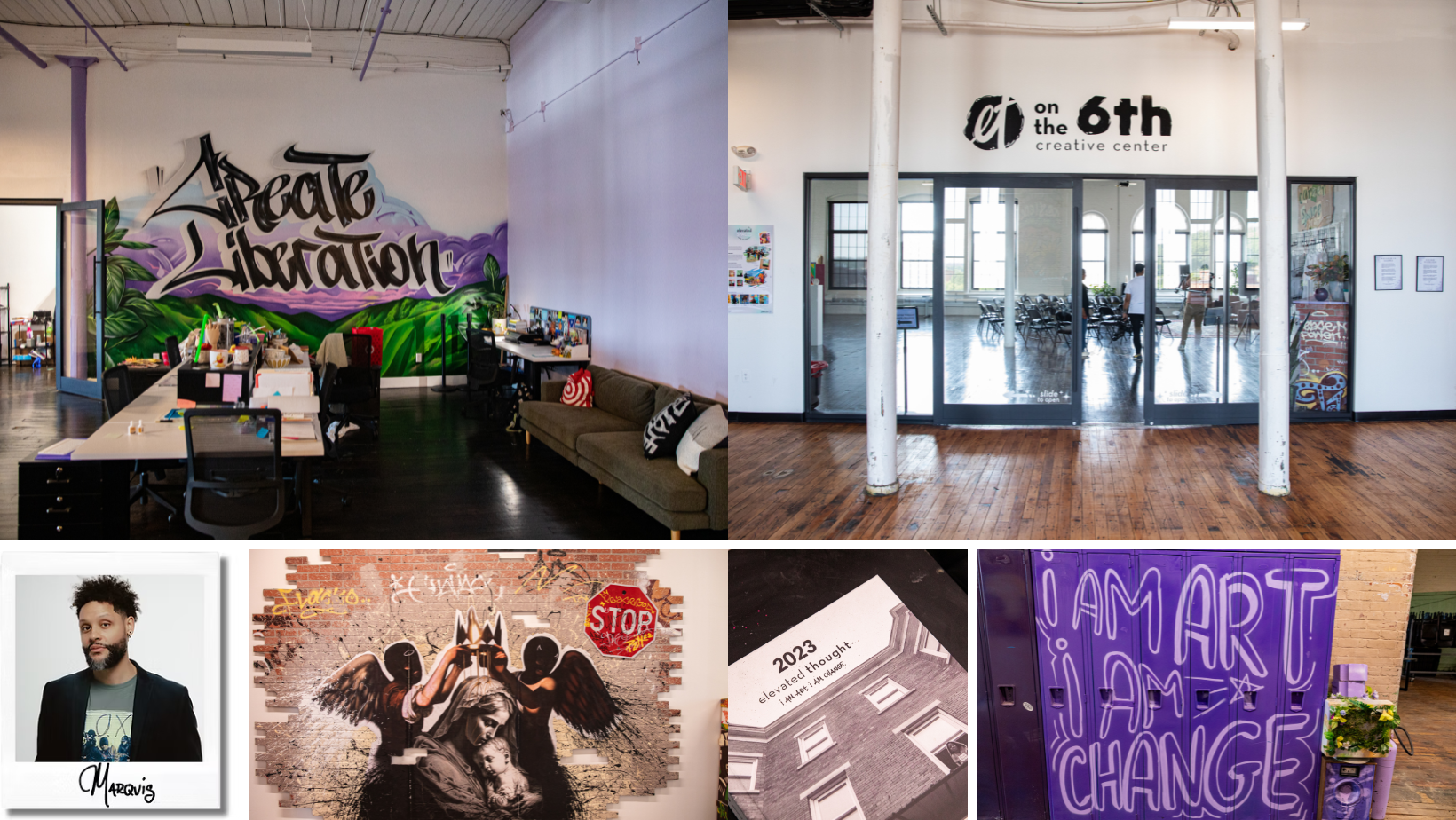
Elevated Thought is an art and social justice nonprofit in Lawrence, and Marquis is its founder and executive director. This is where “creativity is liberation” stops being a conference opener and becomes a daily operating principle.
Specifically, the organization runs creative youth development programs — poetry, storytelling, painting, film — built on a simple premise: creative identity precedes economic identity. Who you are as a maker shapes what you can build. For example, young people in the program have led city beautification projects, written a student bill of rights, and organized town halls. They aren’t theorizing about liberation. They’re practicing it.
What Essex County Does With Its Creativity
ECCF is doing the institutional work. The foundation is doubling grantmaking over five years and launching a $4 million climate resilience coalition with more than 400 partners. It refined its mission and strategic plan this year, too. The machinery is moving.
But institutions reach people through people. That’s the part I keep thinking about. That 200% figure isn’t really a statistic. It’s hundreds of neighbors who saw a space in a new light and built something anyway. Behind every number on a slide is a human carrying an idea through real pressure.
So I’ll repeat a line I said in that room: the humans matter more than their businesses. Businesses close. Sectors shift. The humans who carry ideas through harsh conditions are the ones who endure. Whatever Essex County builds next has to start with them.
So the next time someone asks what the answer is to stagnant wages, climbing housing costs, and food insecurity at 43% — remember that a poet walked to the front of the room before the data did. He wasn’t wrong.
Frequently Asked Questions
Who is Dr. Marquis Victor?
Marquis Victor, Ed.D., is a poet, educator, and the founder and executive director of Elevated Thought, an art and social justice nonprofit in Lawrence, Massachusetts. He performed his original piece “Why I Create” at ECCF’s State of Essex County 2026.
What is the State of Essex County address?
It’s an annual address hosted by the Essex County Community Foundation (ECCF) that presents economic, civic, and community data for the county. The 2026 edition drew roughly 500 people to Endicott College in Beverly on June 11.
What does “creativity is liberation” mean?
It’s Marquis Victor’s framing that creativity is a shared human superpower — a way to re-see ourselves, each other, and our spaces, and to invent solutions where conventional paths are closed. It positions creative capacity as a tool for survival and freedom, not a luxury.
How can I get involved with Creative Collective?
Creative Collective is a 350+ member business support ecosystem across Essex County. You can join the community, attend a monthly Coffee with the Collective, or reply to be added to the upcoming member visit to Elevated Thought in Lawrence.
About the author: John Andrews is Founder & President of Creative Collective, covering the creative sector and creative economy across Essex County. He attended the State of Essex County 2026 at Endicott College and is organizing a visit by members to Elevated Thought in Lawrence.
This story comes from the Creative Collective community — Essex County businesses who believe that when we thrive together, our whole region becomes more vibrant. We’re entrepreneurs, creators, and service providers across all industries, collaborating to build the community we want to be part of. If you see your business as more than just commerce — as a way to contribute to our regional ecosystem — you belong here. Discover how to join our community →

Essex County Community Foundation
View their Member Listing
Essex County Community Foundation‘s (ECCF) mission is to inspire philanthropy that strengthens the communities of Essex County. They do this by managing charitable assets, strengthening and supporting nonprofits, and engaging in strategic community leadership. Since 1998, ECCF and it’s family of 225 charitable funds have granted over $80 million to nonprofits, schools, and students in Essex County. Their goal is
SEE LISTING